
Durham Region’s housing stock spans everything from 1970s Oshawa bungalows with aging wood-burning fireplaces to brand-new Clarington builds where homeowners want a gas fireplace added before the first winter, and David’s been working on all of them since 2011. He covers every community across Durham Region and picks up the phone himself when you call.
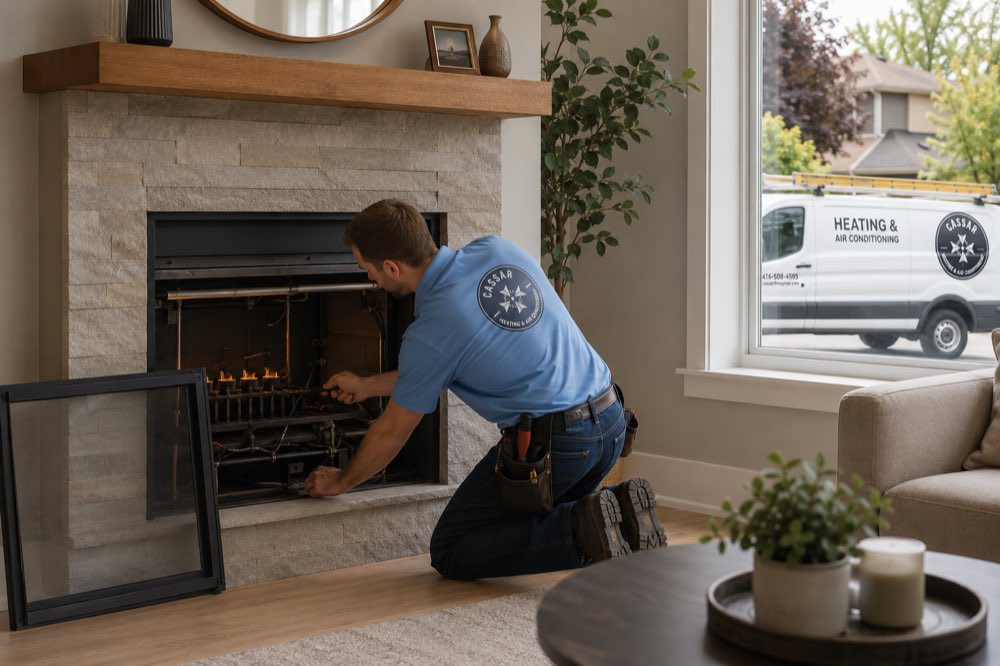
From a first-time gas fireplace install to an emergency repair on a cold January night, David handles every job personally.
David installs gas fireplaces, fireplace inserts, and direct-vent units in homes across Oshawa, Whitby, Ajax, Pickering, and Clarington. Many Durham Region homeowners add a fireplace when finishing a basement or renovating a main floor, David can work around your existing framing and get the venting routed cleanly. Every installation meets TSSA standards and comes with a commissioning check before he leaves.
Pilot won’t stay lit, the ignitor’s clicking but nothing’s catching, or there’s a fault code flashing on the receiver, David diagnoses and repairs gas fireplaces the same day in most cases. He stocks thermocouples, thermopiles, ignitors, and gas valves for the most common brands, so the job usually gets finished on the first visit rather than waiting a week for a part.
If your fireplace is beyond economical repair or you’re moving from a wood-burning unit to gas, David walks you through your options before quoting anything. He’ll tell you honestly if your current unit can be repaired for a reasonable cost, replacement only gets recommended when the numbers actually support it. Durham Region homes with original 1980s or 1990s wood-burning fireplaces are a good candidate for a gas insert, which drops into the existing firebox without major renovation work.
A gas fireplace that sits unused all summer can develop corroded contacts, dried-out gaskets, and debris in the burner tray by the time fall arrives. David’s annual service includes a full burner inspection, glass cleaning, pilot and ignition check, thermocouple test, and a combustion safety check. Book it in September before the first cold snap and you won’t be calling for an emergency repair in January.
Older decorative gas fireplaces in Durham Region homes often run at 60–70% efficiency, meaning a significant portion of the heat goes straight out the flue. Upgrading to a sealed direct-vent unit with a high-output insert can push efficiency above 80%, making the fireplace genuinely useful as supplemental heat rather than just ambiance. David calculates whether the upgrade pencils out for your home before you commit to anything.
A gas smell near your fireplace, a unit that won’t shut off, or a pilot flame that’s burning an abnormal colour needs attention before you use it again. David covers all of Durham Region for emergency calls and answers the phone directly, you’re not leaving a message with a dispatcher and hoping someone calls back. If it’s a gas safety concern, he treats it as urgent.
Working across Durham Region since 2011, I’ve serviced gas fireplaces in Oshawa semis, Whitby new builds, and older Pickering homes where the original decorative fireplace hasn’t been touched in fifteen years. I know what fails first on the brands that were popular here in the 1990s and 2000s, and I carry the parts that fix most of them on the first visit. When you call, you get me, not a dispatcher relaying messages.
A well-maintained gas fireplace lasts 15 to 25 years in typical Ontario conditions. The range is wide because it depends heavily on how often the unit runs, whether it’s serviced annually, and the quality of the original installation. A sealed direct-vent unit that’s been serviced every fall will reach 20-plus years without major component failures. A decorative B-vent fireplace that’s never been touched since installation in 1998 is a different story.
Ontario’s climate is hard on fireplaces in a specific way: the units sit idle all summer in humid conditions, which corrodes electrical contacts and dries out gaskets. When fall arrives and you fire it up for the first time, those degraded components are under load. That’s why annual fall tune-ups matter here more than they might in a drier climate. Catching a failing thermocouple in September costs a service call. Catching it on a cold December night when nothing else is warming the room costs an emergency call.
The biggest lifespan killer David sees in Durham Region homes is neglect combined with hard water. Mineral deposits on the glass, burner ports clogged with fine debris, and pilot assemblies fouled with oxidation all shorten the life of components. A fireplace that gets a 45-minute annual service can easily hit 25 years. One that hasn’t been opened since it was installed rarely makes it to 15 in good working order.
A gas fireplace repair in Durham Region typically runs $150 to $450 depending on what’s failed. Replacing a thermocouple or thermopile sits at the lower end. A gas valve replacement or a full ignition module swap pushes toward the higher end. Parts availability matters, David stocks the common components for Regency, Napoleon, Valor, and Majestic units, so most repairs don’t require a second visit to pick up a part.
A new gas fireplace installation in Durham Region ranges from $2,500 to $6,000 installed, covering the unit, venting, gas connection, and commissioning. That range moves based on the unit you choose, whether the venting route is straightforward or requires running through finished walls, and whether you need a gas line extended to reach the fireplace location. A direct-vent insert dropped into an existing wood-burning firebox is at the lower end. A new built-in with custom venting through an exterior wall on a finished main floor is toward the higher end.
An annual maintenance visit runs $120 to $180. That covers the full inspection, cleaning, and safety check. The best way to know what your specific job will cost is to get a free quote from David, no pressure, no obligation.
Durham Region’s housing stock is concentrated in a few distinct eras. The western communities, Pickering and Ajax, saw significant suburban development in the 1980s and early 1990s, and those homes frequently have original B-vent or natural-draft gas fireplaces that were installed as builder upgrades. These units are now 30-plus years old and either need replacement or are starting to show component failures. Many homeowners in these neighbourhoods are weighing whether to repair what they have or replace it with a more efficient sealed unit.
Whitby and Oshawa have a broader mix, including 1960s and 1970s homes with original wood-burning masonry fireplaces. Homeowners in those properties often want to convert to gas for convenience, and a gas insert is usually the right answer, it drops into the existing firebox, uses the existing chimney liner, and keeps the look of the original fireplace without a full renovation. David’s done dozens of these conversions across Whitby and Oshawa and knows what the older chimney setups typically need to pass inspection.
Clarington and the communities to the east, Bowmanville, Newcastle, Courtice, have seen a large wave of new construction since 2015. These newer homes often include roughed-in gas lines for a future fireplace but the builder didn’t install the unit. David gets regular calls from homeowners in these communities who want to complete the install now that they’ve finished the basement or the main-floor renovation. Because the gas line is already there, these are often straightforward half-day jobs.
The most common sign David sees across Durham Region homes is a pilot light that won’t stay lit after you release the pilot button. This almost always points to a failing thermocouple or thermopile. The pilot lights fine, but the sensor isn’t generating enough voltage to hold the gas valve open. It’s a straightforward repair, but it won’t fix itself and it’ll fail completely before long.
A yellow or orange flame instead of the steady blue flame with yellow tips you’d normally see is worth taking seriously. It can indicate incomplete combustion, a blocked burner port, or air infiltration into the gas line. In Durham Region homes where the fireplace has sat all summer, spider webs and fine debris in the burner assembly are a genuine cause, insects find the burner ports and build inside them. That’s a cleaning issue, but ignoring it causes uneven combustion and puts carbon monoxide risk on the table.
White mineral deposits on the glass, soot buildup that won’t wipe off, and a unit that runs but produces noticeably less heat than it used to are all signs of a fireplace that needs service. If your unit is throwing a fault code on the receiver or the remote control is behaving erratically, that’s usually the thermopile voltage dropping below the minimum threshold, which means the repair window is narrowing before you get a complete no-start.
Durham Region winters are cold enough that a well-sized gas fireplace can meaningfully supplement your furnace in the room where it’s running. Most direct-vent units in the 25,000 to 40,000 BTU range put out enough heat to keep a main floor comfortable on a mild winter day without the furnace cycling. The key word is “well-sized”, an undersized decorative unit burning at low output doesn’t contribute much. If you’re finding your fireplace doesn’t seem to heat the room, it’s worth having David check whether the unit’s output matches the space.
Ontario’s freeze-thaw cycle puts stress on exterior venting components. The termination cap on a direct-vent system sits outside the house and takes the full impact of ice, snow, and temperature swings. David checks these caps during annual service, a blocked or damaged termination cap forces the unit to shut down on a pressure fault or, worse, allows backdrafting. In communities like Clarington and northern Oshawa where winters tend to run colder than the lakeshore, this is a more frequent point of failure.
The best maintenance habit for Durham Region homeowners is simple: book the annual service in September, before you need the fireplace. David’s schedule fills up fast once the first cold week hits in October. Getting in early means you’re not scrambling for a service appointment in November when every fireplace that sat unused all summer decides to act up at the same time.
In Ontario, any gas fireplace work, installation, gas line connection, or alteration to the venting, requires a TSSA-licensed technician. TSSA Licence #000398183 is David’s verification number. You can confirm it on the TSSA website. This matters because unlicensed fireplace work won’t pass a home inspection, may void your homeowner’s insurance, and in the case of gas, carries real safety risk. If a contractor can’t give you a TSSA number, that’s a clear signal to call someone else.
Carbon monoxide is the primary safety concern with gas fireplaces. A properly functioning sealed direct-vent unit vents combustion gases outside and poses minimal CO risk to the home. The risk rises with B-vent and natural-draft fireplaces, particularly older units in Durham Region homes, where a blocked or deteriorating flue can redirect combustion gases into the living space. Every home with a gas fireplace should have a working CO detector within 5 metres of the unit. If yours doesn’t, fix that today.
On the efficiency side, the Ontario Energy Board occasionally offers rebate programs for upgrading to high-efficiency heating equipment, and some gas fireplaces qualify when replacing an older unit. Eligibility changes year to year, so David checks current program status when quoting a replacement. A direct-vent unit with an ECM blower and electronic ignition uses significantly less gas than the standing-pilot B-vent units common in older Durham Region homes, the operating cost savings are real over a heating season.
Checking the simple things before calling saves time for everyone.
Most fireplace issues start with the pilot light going out. Follow the manufacturer’s relight instructions on the unit, usually hold the pilot button for 30–60 seconds.
These small sensors sit in the pilot flame and generate the signal to keep the gas valve open. If they’re worn, the pilot lights but won’t stay on. This needs a technician.
There’s usually a shutoff valve behind or beneath the fireplace. Make sure it’s fully open, these sometimes get turned off accidentally during cleaning.
Most modern gas fireplaces use a remote or wall switch. Weak batteries cause intermittent ignition failures before failing completely.
Heavy soot or white mineral deposits on the glass can affect some sensor-based ignition systems. Clean glass also improves efficiency significantly.
If none of the above got it running, it needs a licensed technician. David serves all of Durham Region and picks up the phone when you call.
A gas fireplace installation in Durham Region typically runs $2,500 to $6,000 fully installed, covering the unit, venting, gas connection, and TSSA commissioning. The low end applies to a gas insert dropped into an existing wood-burning firebox with a straightforward liner installation, those are common in Whitby and Oshawa homes with original masonry fireplaces. The higher end applies to a new built-in unit where the venting needs to be routed through finished walls or over a longer run. The unit itself makes a significant difference too, an entry-level direct-vent fireplace costs less than a high-output unit with a full glass front and a variable-speed blower. If the gas line doesn’t yet reach the fireplace location, adding that run adds cost depending on distance and how much wall needs to be opened. Every installation gets a free upfront quote before any work starts. The best way to know what your specific job will cost is to get a free quote from David, no pressure, no obligation.
It depends on the type of fireplace, and the answer is different for each. A direct-vent gas fireplace, which is what David installs most often, uses a sealed coaxial pipe that passes through an exterior wall or up through the roof. It doesn’t need a chimney. Fresh combustion air comes in through the outer pipe and exhaust goes out through the inner pipe, all sealed from the living space. This is the safest and most common option for new installations in Durham Region homes. A natural-vent or B-vent fireplace does need a vertical flue, either an existing chimney or a purpose-built metal flue. These are common in older Durham Region homes built in the 1980s and early 1990s. If you’re converting from wood-burning to gas in a home with an existing masonry chimney, the chimney needs to be relined, the original clay tile flue isn’t rated for gas appliances. David assesses the venting situation as part of every installation quote, so you’ll know exactly what’s required before any work begins.
A high-output gas fireplace can serve as a primary heat source for a single room or open-concept main floor, but using it as the sole heat source for a Durham Region home through a full winter isn’t the right design for most households. Durham Region winters regularly see overnight lows below -15°C, and a single fireplace can’t distribute heat evenly through a multi-level home the way a furnace with a duct system can. That said, a well-sized direct-vent unit in the 35,000 to 50,000 BTU range can heat a large open-concept main floor on all but the coldest nights, meaningfully reducing how hard your furnace runs. Many Durham Region homeowners use their fireplace as the primary heat source for the main living area in the evening and let the furnace carry the rest of the house. Some customers in Clarington and rural Oshawa use a high-output insert as their primary zone-one heat source with a backup furnace for extreme cold. David can advise on whether the unit you’re considering is sized correctly for the space you want to heat.
Once a year, in the fall before heating season starts. That’s the right interval for a gas fireplace used regularly through an Ontario winter. The annual service covers the burner inspection, glass cleaning, pilot assembly check, thermocouple or thermopile test, ignition system test, and a combustion safety check to confirm there are no CO risks. In Ontario’s climate specifically, the summer humidity affects electrical contacts and gaskets inside the unit, components that were fine in April may have corroded by September after sitting idle through a humid Durham Region summer. Annual service catches these before they become a cold-night failure. If your fireplace is older than 15 years or hasn’t been serviced in more than two years, it’s worth booking a service call now rather than waiting. David’s schedule in Durham Region fills up in October and November when every fireplace that wasn’t serviced in September decides to stop working. Booking in September avoids the wait.
Start with the four things you can check yourself before calling. First, check the pilot light, if it’s out, follow the manufacturer’s relight instructions on the label inside the lower panel. Hold the pilot button for a full 30 to 60 seconds before releasing. Second, check the batteries in your remote receiver and wall switch, weak batteries cause intermittent ignition failures that look like a bigger problem. Third, check the gas shutoff valve behind or below the fireplace to make sure it’s fully open. Fourth, check whether the glass has heavy soot or mineral buildup, on some units this interferes with sensor-based ignition. If the pilot lights but won’t stay lit after you release the button, that’s almost certainly a failing thermocouple or thermopile. The pilot flame isn’t generating enough voltage to hold the gas valve open. This is a technician repair, David carries these parts for the common brands and can usually fix it the same day in Durham Region. If the unit is clicking but nothing’s lighting and the gas supply is confirmed open, the ignitor itself may have failed, which is also a same-day repair in most cases.
A fireplace insert slides into an existing masonry or factory-built firebox opening. It’s the right choice if you have an existing wood-burning fireplace in a Durham Region home and want to convert it to gas without rebuilding anything. The insert uses the existing firebox structure and chimney, with a liner running up to a new termination. Most installations are relatively fast and don’t require significant renovation work. A built-in fireplace, sometimes called a zero-clearance fireplace, is a standalone unit that installs into a framed wall cavity. It’s the standard choice for new construction or for adding a fireplace where none currently exists. It comes with its own enclosed firebox and direct-vent system. A gas log set is a burner assembly with decorative ceramic logs that drops into an existing masonry fireplace. It’s the lowest-cost option, but it’s also the least efficient, most log sets are vented through the open masonry chimney, which means a lot of heat goes up the flue. David recommends inserts over log sets for homeowners who want meaningful heat output, and built-ins for new installations.
David works on the full range of gas fireplace brands found in Durham Region homes, including Napoleon, Regency, Valor, Majestic, Heatilator, Heat & Glo, Lennox, and Superior. For repairs, he carries parts for the most common brands and models, thermocouples, thermopiles, ignitors, gas valves, and receiver modules for Napoleon and Regency units in particular, since those are installed heavily across Whitby, Ajax, and Pickering new builds from the past 15 years. For older or less common brands, he can source parts through his suppliers without a long lead time in most cases. When it comes to new installations, David works with the brands that have solid parts availability and local dealer support in the Durham Region area. He’ll discuss options with you and give you his honest read on which units hold up well and which ones he’s seen problems with, not a sales pitch, just what he’s actually observed doing this work since 2011.
A properly installed and maintained direct-vent gas fireplace is designed to run for extended periods, and many are rated for continuous operation. That said, leaving any gas appliance running unattended overnight is a decision worth making carefully. The sealed combustion chamber of a direct-vent unit means combustion gases are vented outside rather than into the living space, which is the most important safety factor. The risk in older or unmaintained units is different: a B-vent or natural-draft fireplace with a deteriorating flue can backdraft CO into the home, and that’s a serious hazard. Before leaving any fireplace running overnight, confirm you have a working CO detector within 5 metres of the unit and that the fireplace has been serviced within the past year. If the unit has never been serviced, or if it’s more than 15 years old, have David inspect it before you leave it running while you sleep. For newer direct-vent units in good condition with a current annual service, running overnight is generally considered safe, but having a working CO detector in the home is non-negotiable regardless.
“Our gas fireplace in Whitby hadn’t worked in two years. David found a failed thermopile, had the part on the truck, and it was fixed the same afternoon.”
“I called about converting our wood-burning fireplace in our 1980s Pickering house to gas. David came out, looked at the chimney, explained exactly what liner we’d need, and gave me a number before he left the driveway. When he came back to do the install, the job took about four hours and the price was exactly what he quoted. He also walked me through the controls before he packed up, which I appreciated.”
“Three other companies quoted me for a new gas fireplace insert. Two were vague about the final cost and one wanted a hefty deposit just to schedule. David’s quote was clear, the deposit was reasonable, and the invoice on completion matched what he told me. He also put down floor protection the whole time he was working, which nobody else had bothered to do.”
David covers every community in Durham Region for fireplace installation, repair, and maintenance.
Same-day service available. TSSA certified. Honest pricing. Call or book online.