
Courtice grew fast through the 1980s and 1990s, and a lot of those original hot water tanks are now well past their useful life, David regularly works in subdivisions off Prestonvale Road and Trulls Road where a 20-year-old tank is still limping along and the homeowner had no idea. He covers all of Courtice and the rest of Durham Region, with same-day and emergency appointments available when the tank can’t wait.
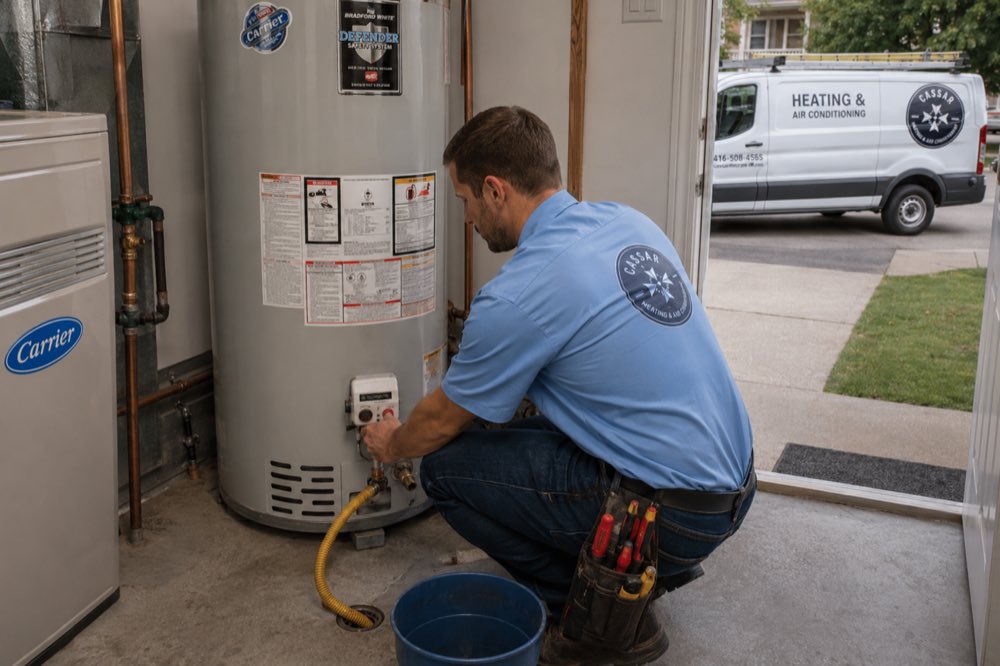
Every job below is handled by David personally, TSSA licensed, upfront pricing, and no pressure to replace something that can be repaired.
David sizes every installation to the household, a four-bedroom home in Courtice’s Worden Drive area uses hot water differently than a starter home on a newer Tooley Road street, and the tank size needs to reflect that. He handles all permits, gas line connections, and TSSA compliance so nothing gets skipped.
A faulty thermostat, a dead element on an electric tank, or a failing dip tube are all things David can fix without replacing the whole unit. He’ll tell you honestly whether the repair makes financial sense before touching anything, and the quote you get is the price you pay.
Many Courtice homes built in the late 1980s and 1990s still have original rental tanks from companies that make getting them removed a frustrating process. David handles the removal and hauls the old unit away, you don’t deal with the rental company paperwork, he does. A new tank goes in the same day.
An annual flush and inspection catches sediment buildup, checks the anode rod, and tests the T&P valve before any of them become a problem. Most homeowners skip this and then wonder why their 12-year-old tank needs replacing ahead of schedule. Thirty minutes of maintenance can add years to a tank’s life.
Moving from a standard tank to a high-efficiency power-vented or condensing unit cuts your gas bill and can qualify for Enbridge or Ontario rebates. David walks you through the options that actually fit your home’s venting setup and budget, not just the most expensive model on the shelf.
A leaking tank or a complete loss of hot water on a January morning in Courtice can’t wait until next week. David picks up the phone himself and gets to you the same day. He stocks the most common tank sizes and parts in his truck, so the job usually wraps in a single visit.
I’ve worked in Courtice since 2011 and I’ve seen the same story play out more times than I can count, a homeowner gets a quote from a company that dispatches whoever’s available, the price changes when the tech shows up, and nobody explains what was actually wrong. When you call me, I’m the one who answers, I’m the one who comes out, and I’m the one accountable for the work.
A conventional gas hot water tank in Ontario lasts between 10 and 15 years under typical conditions. Electric tanks run a little longer on average, often hitting the 12 to 15 year mark before the elements need replacement or the tank itself starts showing signs of internal corrosion. The wide range comes down to three things: water quality, maintenance history, and how hard the tank works.
Ontario’s water supply varies across the province. Durham Region’s municipal water is treated and relatively consistent, but it still carries enough mineral content to contribute to sediment accumulation in the tank over time. That sediment sits on the heating element or the tank floor, forces the burner to work harder, and shortens the tank’s life. A simple annual flush, something most homeowners never do, removes that buildup and keeps the tank running efficiently.
The other factor is the anode rod. That sacrificial rod inside the tank draws corrosion away from the steel walls. When it’s depleted, the tank itself starts corroding from the inside out. Replacing it every three to five years is cheap. Replacing the tank because nobody replaced the rod is not. If your tank is more than eight years old and has never been serviced, it’s worth having David take a look before something fails on a February night.
A standard gas hot water tank replacement in Courtice, including the new unit, removal of the old tank, and all labour, typically runs between $1,200 and $1,900. The range reflects tank size, a 40-gallon unit for a smaller home costs less than a 60-gallon tank for a larger family, and whether the existing gas line, venting, and shut-off valve are in good shape or need attention. Electric tank replacements sit in a similar bracket, though there’s no gas line work involved.
Repairs are considerably cheaper when the issue is isolated. A thermostat replacement on a gas tank might run $200 to $350 depending on parts. A failed upper element on an electric tank is often $150 to $300. The catch is that repair only makes sense if the tank is less than eight or nine years old and the rest of the unit is in reasonable condition. On a 14-year-old tank, spending $300 on a repair when the tank itself is near end of life isn’t good advice, and David won’t give you that advice.
High-efficiency power-vented units cost more upfront, typically $1,600 to $2,400 installed, but available Enbridge and provincial rebates can offset part of that. Every job gets a free, upfront quote before any work starts. The best way to know what your specific job will cost is to get a free quote from David, no pressure, no obligation.
Courtice expanded heavily from the late 1980s through the mid-2000s, which means a large portion of the housing stock is now between 20 and 35 years old. Many of those original homes came with atmospheric-vented gas tanks that vented through a B-vent chimney. Those tanks are reaching or past the end of their service life, and when it’s time to replace them, homeowners sometimes find the old chimney liner has deteriorated or the venting arrangement no longer meets current code. David checks the entire venting system as part of every replacement job, not just the tank itself.
The newer subdivisions built along Bloor Street and south of Highway 2 in Courtice from the 2000s onward more often have power-vented tanks or combination systems that share venting with the furnace. These setups require more care during a swap, getting the venting balanced correctly so both appliances draft properly matters for both performance and safety. It’s not complicated if you know what you’re doing, but it’s a detail a less experienced tech might overlook.
Courtice also has a growing number of homes with utility rooms that were designed for compact equipment. Fitting a replacement tank into a tight mechanical room, working around a furnace and water softener, and still leaving proper clearances is part of almost every other job David does out here. He comes prepared with the right fittings to handle it on the first visit.
The most obvious sign is running out of hot water faster than you used to. If a family of four used to get through back-to-back showers without a problem and now can’t, the tank isn’t failing, it’s either undersized for a growing household, or sediment has reduced its effective capacity. Both are fixable, but in different ways. Sediment buildup can sometimes be flushed out; an undersized tank needs replacing with the right size for the demand.
Rust-coloured water coming from the hot tap is a more urgent signal. It usually means the interior of the tank is corroding, which means the tank is near the end of its life and a leak or failure is coming. In Durham Region, rusty hot water can occasionally get confused with a municipal water issue, but a quick test, run the cold tap and see if the discolouration appears there too, tells you the difference. Cold water looks fine but hot water is rusty? That’s the tank.
Any water pooling around the base of the tank is a call-David-today situation. Small leaks can appear around the pressure relief valve, the drain valve, or fittings, some of those are repairable. A leak from the tank body itself means the tank is done. Letting it sit risks water damage to the mechanical room floor, and in finished basements on Courtice’s older streets, that gets expensive fast.
Durham Region winters push furnaces and water heaters hard. When outdoor temperatures drop below minus 15 and stay there for days at a time, the cold water entering the tank is significantly colder than in summer, sometimes 4 to 7 degrees Celsius versus 15 degrees in warmer months. That means the burner runs longer every cycle just to reach the set temperature, which adds wear and cost. Keeping the thermostat set to around 49 degrees Celsius (120 Fahrenheit) balances efficiency against delivery, high enough to kill bacteria, low enough not to overstrain the unit.
An insulating blanket around older tanks with poor factory insulation can meaningfully cut standby heat loss, particularly in utility rooms that get cold in winter. It’s a low-cost measure that adds up over a heating season. On newer tanks with higher insulation ratings built in, it’s less necessary, but it’s worth checking the energy factor rating on your current unit if it’s more than 10 years old.
The other seasonal reality is that Courtice homes with exposed pipes in garages or against exterior walls run a real risk of frozen supply lines in extreme cold snaps. If the cold water inlet to your tank sits against an exterior wall without adequate insulation, that’s a vulnerability worth addressing before winter sets in rather than after a burst pipe proves the point.
In Ontario, all gas appliance installation and repair work on hot water tanks must be performed by a TSSA-licensed technician. That’s not a suggestion, it’s the law. TSSA Licence #000398183 is David’s credential, and it’s verifiable through the TSSA’s public registry. Unlicensed gas work voids equipment warranties and creates a liability problem for the homeowner if anything goes wrong. It also puts your family at risk of carbon monoxide exposure if the venting isn’t done correctly.
CO is the specific risk when a gas tank’s venting system is improperly installed, deteriorated, or blocked. The products of combustion need a clear path out of the building. A cracked heat exchanger or a blocked flue can push carbon monoxide back into the living space. CO detectors on every level of the home are mandatory in Ontario, but a working detector doesn’t substitute for correct installation, it’s a last line of defence, not a first one.
On the efficiency side, Ontario residents may qualify for Enbridge Gas rebates when upgrading from a standard tank to a qualifying high-efficiency unit. The rebate amounts and eligible models change periodically, so the best approach is to ask David at the time of quoting, he’ll confirm what’s currently available and whether the unit you’re considering qualifies. Don’t rely on a sales pitch from a big box store to get that right.
Checking the simple things before calling saves time for everyone, and sometimes fixes the problem in five minutes.
The temperature dial on your tank may have been turned down accidentally, especially after maintenance visits. Try turning it up and waiting 30 minutes.
Electric tanks have a dedicated breaker that trips occasionally. Gas tanks have a pilot light, if it’s out, follow the relight instructions on the label.
A dripping T&P valve is a warning sign, not normal. Turn down the thermostat and call Cassar, don’t ignore a dripping relief valve.
Loud rumbling or popping usually means sediment has built up on the tank floor. Flushing may help on newer tanks; on older ones it often signals time to replace.
The shutoff valve on the cold water inlet to the tank must be fully open. It sometimes gets partially closed during plumbing work nearby.
If none of the above solves it, you need a TSSA-licensed technician. David covers all of Durham Region and picks up the phone himself.
A gas hot water tank in Durham Region typically lasts 10 to 15 years, and an electric tank can stretch to 12 to 15 years if it’s been maintained. Those numbers aren’t guarantees, they’re averages. What shortens tank life here is sediment buildup from mineral content in the water supply and skipped anode rod replacements, both of which I see regularly in Courtice homes that have never had the tank serviced. What extends it is an annual flush, a functioning anode rod, and a properly sized unit for the household. A tank that’s been running hard for a four-person family since 2008 probably has less time left than one installed in 2012 in a two-person household. If your tank is over 10 years old and you’re noticing slower recovery, rusty water, or odd noises, it’s worth a conversation before it decides to go on its own schedule rather than yours.
The repair-versus-replace decision comes down to the tank’s age and what’s actually wrong with it. If the tank is under eight years old and the issue is an isolated component, a thermostat, a heating element, a failed dip tube, repair almost always makes sense. The cost is low relative to a new tank and you’re still getting years of life from the unit. If the tank is over 10 years old, the math changes. Spending $300 on a repair when the tank has two or three years of useful life left isn’t good value, and I’ll tell you that clearly rather than take the repair money. Tank body corrosion, a rusted-out base, or water pooling under the unit means replacement every time, those aren’t things you repair. The only way to know for certain which situation you’re in is to have someone look at it, and I’ll give you an honest read without pushing you toward the more expensive option.
A standard gas hot water tank replacement in Courtice or anywhere else in Durham Region typically runs between $1,200 and $1,900 installed, including the unit, removal and disposal of the old tank, and all labour. Electric tank replacements fall in a similar range. The main factors that move the price are tank size, a 40-gallon unit for a smaller home costs less than a 60-gallon tank, and whether the existing venting, gas line, and shut-off valves are in good shape. If I arrive and the B-vent flue liner has deteriorated or the gas shut-off needs replacing for code compliance, that gets added to the quote transparently before I start, not as a surprise on the invoice. High-efficiency power-vented units run $1,600 to $2,400 installed but may qualify for Enbridge rebates. The best way to know what your specific job will cost is to get a free quote from David, no pressure, no obligation.
Buy it, in almost every case, ownership makes more financial sense over the long run than renting through a utility company. Ontario homeowners pay anywhere from $25 to $50 a month or more for a rental tank, and those payments never stop. Over 10 to 12 years you’ll spend significantly more than the cost of a new tank, and at the end of the rental period you own nothing. You also have less flexibility on which company services the equipment and, depending on your rental agreement, you may face restrictions or buyout fees when you try to cancel. The main appeal of renting is no upfront cost, which I understand matters when a tank fails suddenly. But buying outright, or replacing on your own terms before a failure forces the issue, means you control the equipment, you choose who services it, and you’re not writing a cheque to a rental company every month for the rest of the time you own the home. I can help you cut ties with a rental tank if you’re currently renting, that process isn’t as complicated as rental companies sometimes make it sound.
A straightforward hot water tank replacement in Courtice typically takes two to three hours from start to finish. That includes draining and removing the old tank, installing the new unit, connecting the gas line or electrical supply, checking the venting, testing everything under pressure, and making sure the temperature and relief valve settings are correct before I leave. If the job involves additional work, replacing a corroded shut-off valve, rerouting a vent pipe that no longer meets current code, or working around a tight mechanical room with multiple appliances, add another 30 to 60 minutes. I stock common tank sizes in my truck, so for most Courtice homes the job wraps in a single visit the same day you call. I’ll give you a realistic time estimate when I quote the job so you’re not sitting around wondering.
Turn off the cold water supply to the tank immediately, there’s a shut-off valve on the cold water inlet line going into the top of the unit. Turn that clockwise until it stops. If the tank is gas-fired, turn the gas valve on the tank to the pilot position rather than fully off, that keeps the pilot from relighting the burner while the tank is compromised but makes relighting easier once a new tank is in. For an electric tank, flip the breaker to the water heater off. Then call me. Where the leak is coming from tells me a lot before I even arrive: a drip from the T&P valve is different from a seam leak in the tank body, which is different again from a weeping drain valve. In Clarington homes with finished mechanical rooms or basements, getting water off the floor fast matters, towels or a wet vac while you wait can save drywall. Don’t use the tank again until someone has looked at it.
Yes, removing and hauling away the old tank is part of every replacement job David does in Courtice and across Durham Region. You don’t need to arrange separate disposal or figure out how to get a 150-pound steel tank out of your mechanical room on your own. David drains it, disconnects it, moves it out, and takes it with him. If you’re replacing a rental unit, he handles the disconnection so the rental company can arrange pickup of their equipment, that part of the process is straightforward once the tank is off the gas line and out of service. The only thing you need to do is make sure there’s clear access to the mechanical room. Leave the rest to David.
David installs tanks from proven manufacturers including Bradford White, Rheem, AO Smith, and John Wood, brands that have strong warranty support, readily available parts, and a track record of performing in Ontario’s climate. The brand David recommends for a given job depends on what’s available at the right size, what fits the venting setup in your home, and what makes sense for your budget. He doesn’t have a financial arrangement with any single manufacturer, so the recommendation you get is based on what’s actually right for the job rather than what pays him a commission. If you’ve got a specific brand preference, mention it when you call and he’ll tell you honestly whether it’s a good fit for your situation or not.
“Our hot water tank went at 11 p.m. on a Thursday. David was at our Courtice house by 8 the next morning with a new tank in the truck and it was done before noon.”
“I called David because our water was taking forever to heat up and I assumed we needed a full replacement. He came out, looked at the tank, and told me the dip tube had failed, a $200 repair on a tank that still had years left on it. He could’ve sold me a new unit and I wouldn’t have known any better. That kind of honesty is why I’ll call him for everything going forward.”
“Price he quoted on the phone was exactly what I paid. He laid down covers on the floor through the hallway to the mechanical room, did the whole job, and left the place cleaner than he found it. For a tank swap in Courtice I didn’t expect that level of care.”
David covers all of Durham Region, if you’re near Courtice or anywhere in Clarington, he’s your call.
Same-day service available. TSSA certified. Honest pricing. Call or book online.