
Clarington’s mix of Bowmanville subdivisions, rural acreages, and Newcastle-area homes means David regularly works on everything from builder-grade tanks in 2000s-era semis to older propane-fed units in farmhouses well off the 115, one municipality, a lot of different setups. He covers all of Clarington for same-day and emergency hot water tank calls, and he answers the phone himself when you ring.
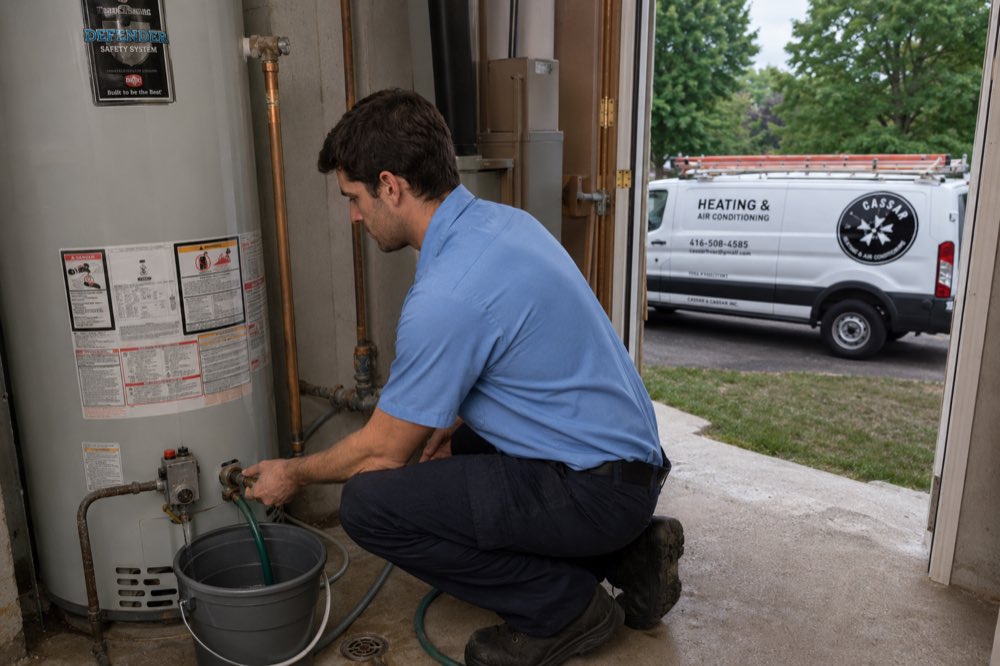
From Bowmanville to Orono, Courtice to the rural concessions east of Newcastle, David handles every hot water tank job across the municipality.
David installs natural gas, electric, and propane hot water tanks across Clarington. Many of the newer Bowmanville subdivisions off Green Road have natural gas rough-ins already in place, which makes swapping to a higher-efficiency unit straightforward. Every installation comes with a full code-compliant setup and a permit where required.
If your tank’s still within a reasonable service life, a repair is often the right call. David diagnoses the problem on the first visit and tells you straight whether fixing it makes financial sense. He stocks common parts, so many repairs wrap up the same day without a second trip.
When a tank’s past the point of repair, David handles the full swap: removal of the old unit, proper disposal, and installation of the new one in a single visit wherever possible. Clarington homeowners with finished basements sometimes need the old tank cut and removed in sections, David’s seen that situation enough times out here that he comes prepared.
Flushing sediment, testing the T&P valve, checking the anode rod, and inspecting the burner assembly, a yearly service call keeps your tank running efficiently and catches small issues before they become costly ones. David books tune-ups across Clarington year-round.
Upgrading from a standard 60% AFUE gas tank to a power-vent or direct-vent unit can cut your water heating costs noticeably. David sizes the replacement correctly for your household, explains the venting options, and handles everything from the gas line connection to the permit filing.
A leaking tank or a complete loss of hot water can’t wait a week for a scheduled call. David takes emergency calls across Clarington and gets out the same day. He answers the phone directly, you won’t spend 20 minutes on hold with a call centre trying to describe what’s happening to someone who can’t help.
I’ve been doing hot water tank work in Clarington since 2011, the municipality covers a lot of ground, and the calls vary a lot, from tight utility rooms in Courtice townhomes to sprawling rural properties east of Newtonville where a propane tank sits 50 metres from the house. Whatever the setup, the job gets done properly and the quote you got is the number on the invoice.
A conventional storage-style hot water tank in Ontario typically lasts between 8 and 12 years with average use and no maintenance. Tanks that get an annual flush and a fresh anode rod every few years regularly push 14 to 15 years. Tanks that get ignored from installation to failure usually don’t make it past 9 or 10.
Ontario’s water chemistry plays a real role. Durham Region sits in an area with moderately hard water, and the minerals in that water settle on the tank floor as sediment over time. That sediment layer forces the burner to work harder to heat the water above it, accelerating wear on the tank’s lower shell. Flushing the tank once a year removes most of that buildup before it becomes a problem.
Cold weather shortens tank life indirectly. When the water coming into your home in January is close to 4°C, the tank fires more frequently to hold temperature. A tank in an uninsulated or poorly heated utility space in a Clarington rural property works harder every winter than the same model would in a conditioned basement in a newer Bowmanville home. Insulating the tank and the first metre of pipe going out costs almost nothing and takes years off the workload.
A standard natural gas hot water tank replacement in Clarington, supply, installation, and disposal of the old unit, typically runs between $1,200 and $1,900 depending on tank size and venting requirements. A 40-gallon unit in a straightforward setup comes in at the lower end. A 60-gallon power-vent unit replacing an older atmospheric model, where the venting needs to change, sits at the higher end. Electric tank replacements tend to run $900 to $1,500 depending on amperage and panel work.
Repair costs vary widely based on the part. Replacing a thermocouple or thermopile on a gas tank is a relatively minor job, typically $150 to $300 all in. Replacing a heating element on an electric tank is usually in the same range. A failed gas valve or heat exchanger on an older tank often costs more to fix than the tank is worth, which is when David will tell you plainly that replacement makes more sense.
Every job gets a firm upfront quote before anything starts. The best way to know what your specific job will cost is to get a free quote from David, no pressure, no obligation.
Clarington is a large municipality with a genuinely varied housing stock. Bowmanville and Courtice have seen significant residential development since the early 2000s, and many of those homes have natural gas set up from new, with standard utility rooms that take a straightforward swap. Newcastle and the surrounding communities have older homes mixed in with newer infill, and the rural concessions east and north of Bowmanville include farmhouses and century homes where propane or electric is the only option.
In the older Bowmanville core, David regularly sees tanks that were installed in the 1990s and have been rented from a utility company for decades. A lot of Clarington homeowners don’t realize they’ve been paying a monthly rental fee on a 20-year-old tank when they could own a new, more efficient unit outright. Buying versus renting is a conversation worth having, and David lays out the numbers without pushing one option over the other.
The rural properties east of Newtonville and around Orono present a different challenge. Propane-fed tanks there require the right regulator, proper bonding, and in some cases updated connections that an older installation never had. David works on propane setups regularly across this part of Clarington, and he carries the right parts to handle most of those configurations on the first visit.
The clearest sign is water on the floor around the tank. Even a small puddle under the unit deserves a same-day call, because the source matters. A dripping T&P relief valve means the pressure or temperature inside is too high. A slow weep from the tank shell itself usually means internal corrosion, which isn’t repairable. Condensation on the outside of a cold tank looks similar but isn’t dangerous. Telling them apart is a quick visual check that David does on arrival.
Inconsistent water temperature is another clear signal. If your shower goes cold after five minutes when it used to last fifteen, the most common cause in Durham Region homes is sediment buildup reducing the effective capacity of the tank, or a failing heating element on an electric unit. Rumbling or popping sounds during the heating cycle almost always mean the sediment is thick enough that the burner is boiling water trapped beneath it.
Rust-coloured water coming from the hot tap points to corrosion inside the tank or a depleted anode rod. Once the anode rod is gone, the steel tank shell corrodes directly. At that point replacement is usually the only option. The anode rod is one of the cheapest parts in the tank to replace; skipping it is what turns a $60 service item into a $1,500 replacement job.
Durham Region’s winters push hot water tanks harder than homeowners typically expect. From November through March, incoming cold water temperatures drop well below 10°C, and the tank’s burner or element runs far more frequently than it does in summer. Setting the thermostat to 49°C (120°F) rather than cranking it to 60°C reduces that cycling frequency, saves energy, and lowers the scaling rate inside the tank. It’s also the temperature Health Canada recommends as a balance between Legionella control and scald prevention.
Pipe insulation on the first metre of both the hot and cold lines leaving the tank cuts standby heat loss on cold nights. In unheated or partially heated utility spaces, common in older Clarington rural homes, wrapping the tank itself with an insulation blanket keeps the recovery time down and extends the life of the outer shell. These are small investments that compound over years of operation.
Annual flushing is the single highest-return maintenance task for Ontario hot water tanks. It takes about 20 minutes, removes the sediment that accumulates from the region’s moderately hard water, and gives David a chance to inspect the T&P valve, the anode rod, and the burner assembly while he’s there. Tanks that get this done annually consistently outlast tanks that don’t.
In Ontario, gas appliance work, including hot water tank installation and repair, requires a TSSA-licensed technician. That’s not a formality; it’s the law, and it’s backed by real safety reasons. A gas line connection done incorrectly, a flue pipe that doesn’t draft properly, or a T&P valve piped to the wrong location can all cause serious harm. David holds TSSA Licence #000398183, which you can verify directly through the TSSA’s public registry. Any contractor who can’t provide a licence number shouldn’t be touching a gas appliance in your home.
Carbon monoxide is the specific risk with gas-fired equipment in enclosed spaces. A blocked or incorrectly pitched flue on an atmospheric-vent tank can allow combustion gases to spill back into the utility room rather than exhausting outside. A working CO detector on every floor of your home, including near the furnace and water heater, is a basic protection that David recommends to every homeowner he visits.
On the efficiency side, the Canada Greener Homes Grant program and Enbridge’s Home Efficiency Rebate program have both offered rebates for qualifying high-efficiency water heater upgrades. Eligibility and available amounts change year to year, so David will tell you what’s currently on the table when you get your quote. Installing a qualifying unit can reduce the net cost of a replacement meaningfully.
Checking the simple things before calling saves time for everyone.
The temperature dial on your tank may have been turned down accidentally, especially after maintenance visits. Try turning it up and waiting 30 minutes.
Electric tanks have a dedicated breaker that trips occasionally. Gas tanks have a pilot light, if it’s out, follow the relight instructions on the label.
A dripping T&P valve is a warning sign, not normal. Turn down the thermostat and call Cassar, don’t ignore a dripping relief valve.
Loud rumbling or popping usually means sediment has built up on the tank floor. Flushing may help on newer tanks; on older ones it often signals time to replace.
The shutoff valve on the cold water inlet to the tank must be fully open. It sometimes gets partially closed during plumbing work nearby.
If none of the above resolved it, it needs a licensed technician. David serves all of Clarington and Durham Region and picks up the phone himself.
Most hot water tanks in Durham Region last between 8 and 12 years, with well-maintained units sometimes reaching 14 or 15. The main factors that shorten that lifespan here are the region’s moderately hard water, which deposits sediment on the tank floor and accelerates wear on the lower shell, and the cold incoming water temperatures every winter that force the tank to fire more frequently. A tank that gets flushed annually and has its anode rod checked every three or four years will consistently outlast one that’s been ignored. I’ve replaced tanks in Clarington that were 16 years old and still holding on, and I’ve replaced ones that failed at 7 because they’d never had any maintenance at all. If your tank’s pushing 10 years and showing signs of strain, a repair might buy you another year or two, but at that age, replacement is usually the better investment. Call me and I’ll tell you honestly which way it makes sense to go.
It depends on three things: the age of the tank, the cost of the repair, and whether the tank is already showing other signs of wear. If the tank is under 8 years old and the repair is straightforward, a failed thermocouple, a worn element, a faulty gas valve, it’s usually worth fixing. Those repairs are typically $150 to $400 and can extend the tank’s life several more years. If the tank is over 10 years old and the repair quote exceeds $500, you’re often better off putting that money toward a replacement. A new tank comes with a warranty, better efficiency, and you won’t be staring down another repair in six months. The repair that tips it toward replacement is a leaking tank shell, there’s no fix for that, and once the outer wall is compromised, water damage to the surrounding area becomes the next problem. I’ll tell you plainly which way to go when I see the unit. I’m not going to push a replacement if a repair makes sense financially.
A standard natural gas hot water tank replacement in Durham Region, including the tank, installation, and disposal of the old unit, typically runs between $1,200 and $1,900. A 40-gallon atmospheric-vent unit in a clean, accessible utility room comes in at the lower end of that range. A 60-gallon power-vent tank where the venting configuration needs to change, or where an older home requires updated connections, sits toward the top. Electric tank replacements generally run $900 to $1,500 depending on tank capacity and whether any panel work is needed. For Clarington homeowners with propane-fed tanks, pricing varies based on the existing setup, regulator type, and connection condition. What drives the variation most is venting, accessibility, and whether the existing connections are up to current code. Every job gets a firm upfront quote before anything starts, the number you approve is the number on the invoice. The best way to know what your specific job will cost is to get a free quote from David, no pressure, no obligation.
Buying your hot water tank outright is almost always the better long-term financial decision for Ontario homeowners. Rental programs, typically offered through utilities like Enercare or Direct Energy, charge between $25 and $45 per month indefinitely, which means you’re paying $300 to $540 every year for a tank you’ll never own. Over ten years that’s $3,000 to $5,400, and the rental company retains the asset and controls the service schedule. Purchasing a tank outright, including installation, runs $1,200 to $1,900 for most Clarington homes, and you own it. In Clarington’s Bowmanville core especially, I see a lot of homeowners who’ve been renting the same tank for 15 or 20 years and have paid far more in fees than the tank ever cost. The rental does cover repairs and replacements at no extra cost, which has some value, but on a well-maintained tank the repair costs over a typical lifespan don’t come close to the cumulative rental fees. I’ll walk you through the numbers on your specific situation when you call, and you can decide what makes sense for you.
A standard hot water tank replacement in Clarington takes two to three hours from arrival to clean-up in most cases. That covers draining and disconnecting the old tank, removing it from the utility room, setting the new unit in place, reconnecting the gas or electrical supply, making the water connections, testing the unit, and checking for leaks. If the venting configuration needs to change, for example, switching from an atmospheric flue to a power-vent unit, add another hour for that work. Tight utility rooms or tanks in finished basements that need to come out in pieces can add time. I carry the equipment to handle those situations, and I’ll tell you upfront if your specific setup looks like it’ll run longer. Most Clarington homeowners have hot water back before dinner the same day I arrive.
Turn off the cold water supply to the tank first, there’s a shutoff valve on the cold water inlet line at the top of the unit. For a gas tank, turn the gas valve to the “pilot” position rather than fully off, which keeps the pilot lit without continuing to heat. For an electric tank, flip the dedicated breaker. Then call me. Where the leak is coming from matters a lot. A dripping T&P relief valve on the side or bottom of the tank means the pressure or temperature inside is running too high, that’s a mechanical issue that may be repairable. A slow seep from the tank body itself, usually from the lower third, means the inner shell has corroded through, and that’s a replacement, full stop. Don’t ignore even a small puddle under the tank; water damage to the subfloor or surrounding walls is an expensive secondary problem. I take emergency calls across all of Clarington and I can usually get out the same day.
Yes, every replacement job includes removal and disposal of the old tank, it leaves with me when I go. You won’t be left trying to figure out how to get a 150-pound tank to a disposal facility or calling a separate junk removal service. In Clarington homes where the utility room is in a tight space or the basement has a finished ceiling that limits access, I come prepared to handle those situations. Older tanks in rural properties sometimes have additional connections or fittings that need to be properly capped before the unit comes out, that’s factored into the job, not added on as a surprise charge at the end. Disposal is handled responsibly; the metal gets recycled. The quote you get upfront covers everything: supply, installation, and haul-away.
I install tanks from several reputable manufacturers depending on what’s the right fit for your home and budget, brands including Bradford White, Rheem, AO Smith, and John Wood are ones I work with regularly. I don’t push one brand over another based on margin; I recommend what makes sense for your application. Bradford White units, for example, are built specifically for contractor installation rather than the retail channel, which means the components are generally more serviceable when a repair is needed years down the line. For most Clarington homeowners replacing a standard gas or electric tank, any of these brands will serve you well for 10 to 15 years with basic maintenance. If you’ve got a specific brand preference, let me know when you call and I’ll tell you honestly whether it’s a good fit for your setup.
“Tank started leaking on a Friday afternoon. David was at our Bowmanville house by 4 p.m., old tank out and new one running before 7.”
“I’d been quoted $2,400 by another company and called David to get a second opinion. He came out to our place in Newcastle, looked at the tank, and told me the existing venting was fine to reuse, the other quote had it down for replacement. His price was $1,350. He explained exactly what he was doing and why, and the job was clean. I’ve already sent his number to two neighbours.”
“What struck me was how careful he was in the utility room, put down a mat before he started, cleaned up the old sediment that had spilled when he drained it, and left the area neater than he found it. Clarington’s got a lot of contractors, and I’ve had ones that treat your house like a job site. David doesn’t. Price was exactly what he quoted on the phone.”
David covers all of Durham Region for hot water tank installation, repair, and replacement.
Same-day service available. TSSA certified. Honest pricing. Call or book online.