
Durham Region’s rapid growth through the 1980s and 1990s left thousands of homes with builder-grade duct systems that were undersized from day one, and after 30-plus years of use, those systems are now cracking, leaking, and costing homeowners real money in wasted energy. David covers every community in Durham Region and picks up the phone when you call.
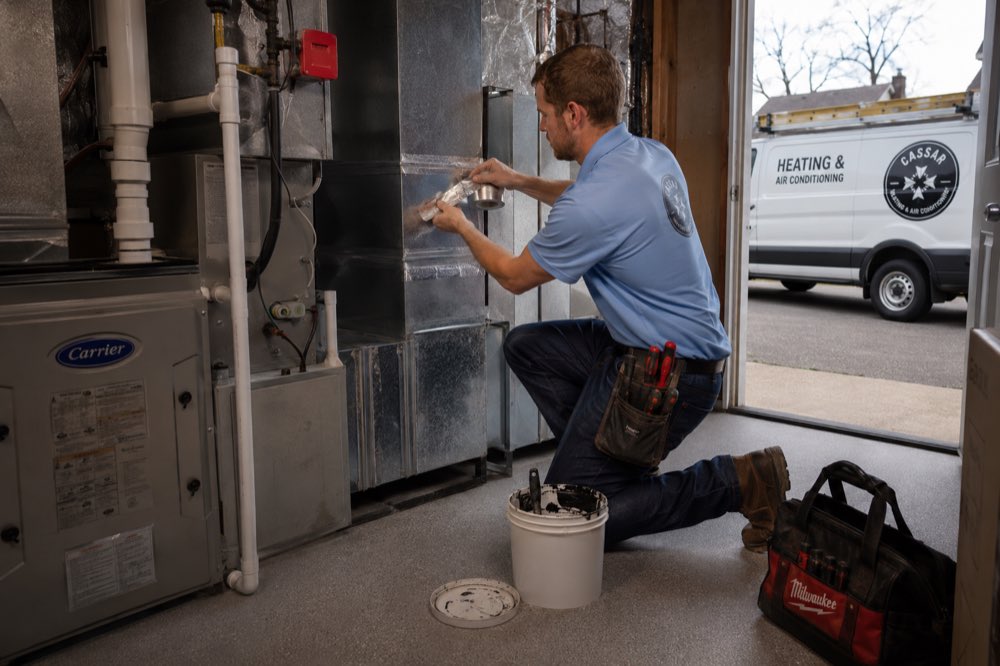
Every job below is work David does himself or directly oversees. No subcontracting, no surprise crews.
New builds and major renovations across Durham Region often involve running ductwork through finished framing where every run needs careful planning. David sizes each branch to match the actual heat load of the room it serves, not a builder’s shortcut. That matters most in larger Durham Region homes where long duct runs can kill airflow before the air reaches the far end of the house.
Leaking joints, disconnected flex duct, and crushed supply runs are common repair calls David handles throughout Durham Region. He diagnoses the actual source before quoting, which means you won’t pay to patch a symptom while the real problem keeps running up your heating bill. Most repairs are completable in a single visit.
When repair no longer makes economic sense, David replaces the duct system and recalculates the layout at the same time. Many Durham Region homes built between 1985 and 2000 have original galvanized steel trunks that are now separating at the seams or lined with deteriorating fiberglass insulation. Replacing them properly, with sealed connections and correct sizing, typically cuts heating and cooling bills by a measurable amount.
A duct system inspection every year catches small leaks and insulation failures before they become expensive. David checks static pressure, inspects every accessible joint, and looks for signs of moisture intrusion that can lead to mould growth inside the duct work. He’ll tell you what he found and what actually needs attention, not a list of upsells.
Upgrading to a high-efficiency furnace or heat pump without modifying the ductwork first is one of the most common mistakes David sees in Durham Region. A high-static duct system will cause a variable-speed blower to hunt and cycle, shortening its life. David re-engineers the duct layout to match the new equipment before the new unit goes in.
A completely disconnected duct trunk in the middle of January isn’t something you wait a week to fix. David offers emergency service across all of Durham Region, including Oshawa, Whitby, Ajax, Pickering, Clarington, and surrounding communities. When you call (416) 508-4585, David answers the phone, not a dispatcher.
Since 2011, I’ve worked through basements and crawlspaces across Durham Region, from post-war bungalows in Oshawa’s Lakeview neighbourhood to newer two-storey builds in Courtice and Newcastle where the original duct layouts simply weren’t designed for the rooms they were supposed to heat. I give you a straight answer about what the system actually needs, and I quote that price before I touch anything.
Most residential duct systems in Ontario last between 20 and 30 years before they need significant repair or replacement. Galvanized steel trunk lines can push toward the upper end of that range if the joints were sealed properly at installation and the system has been kept dry. Flexible duct runs, used for branch lines off the trunk, are more vulnerable and typically start deteriorating at the 15-to-20-year mark as the inner liner cracks and the insulation jacket breaks down.
What shortens that lifespan in Ontario specifically is humidity cycling. Our summers push moisture into unconditioned basement spaces, and the temperature swings between July and January are among the largest in North America. Metal expands and contracts at every transition, which works sealant loose over years. Homes with basement crawlspace sections or uninsulated duct runs through garages are especially prone to early joint failure.
The single most effective maintenance step is checking and sealing visible joints every few years, particularly where the trunk transitions to branch runs. Mastic sealant outlasts foil tape by a considerable margin, if you see tape peeling on an older system, it’s worth having David look at the full run rather than just retaping the visible spot.
A targeted repair, sealing a leaking joint, reconnecting a disconnected flex run, or replacing a damaged section of trunk, typically runs between $200 and $600 in Durham Region, depending on where the problem is and how much access the space allows. Finished ceilings and tight crawlspaces add time and cost. An accessible basement repair at a visible joint is a much faster job than one buried behind drywall.
A full duct system replacement for a typical Durham Region two-storey home (roughly 1,800 to 2,400 square feet) generally lands between $3,500 and $7,500. That range reflects differences in home layout complexity, whether the existing trunk locations work for the new system, and what materials make sense for the application. Some older homes need the trunk repositioned to serve an addition or renovation, which adds scope and cost.
Every job David quotes is priced before work starts. The best way to know what your specific job will cost is to get a free quote from David, no pressure, no obligation.
Durham Region experienced its most intense residential development between roughly 1978 and 2005, with large subdivisions spreading outward from Oshawa into Whitby, Ajax, Pickering, and eventually Clarington. Most of those homes used builder-grade galvanized steel trunk systems with flexible branch runs, sized according to codes that have since been revised upward to account for higher-efficiency equipment and tighter building envelopes. A home built in 1992 in Whitby was designed around a 60% AFUE furnace. Running a modern 96% AFUE unit through that original ductwork without recalculating static pressure causes real problems with airflow and equipment wear.
Oshawa’s older neighbourhoods, Lakeview, Donevan, O’Neill, include a significant number of post-war bungalows and early split-levels where duct systems were often run through wall cavities rather than a proper basement trunk-and-branch layout. David sees these frequently when Oshawa homeowners are upgrading their heating equipment and discover the duct layout doesn’t match the new furnace’s requirements at all.
Clarington’s newer communities, Bowmanville, Newcastle, Courtice, tend to have more recent systems, but the homes are larger and longer, which means branch runs are often undersized for the room volumes they serve. A bedroom at the far end of a long branch run in a Bowmanville detached is one of the most common complaints David hears from homeowners in that part of Durham Region.
The most reliable sign of a duct problem is uneven temperature across the house, specifically rooms that are consistently 3 to 5 degrees cooler or warmer than the thermostat setting. In Durham Region, that often shows up first in upstairs bedrooms in summer or in rooms over a garage in winter. Those temperature differences point to specific branches that are undersized, leaking, or blocked, not to the furnace or air conditioner itself.
Higher-than-expected energy bills without a change in usage patterns are another indicator. A duct system that’s losing 20% of conditioned air to leaks into the basement or attic won’t show up as a fault code on your furnace, but it will show up on your Enbridge or electricity bill every month. David’s seen Durham Region homeowners cut their heating bills noticeably just by having the duct joints sealed properly.
Dust accumulation around supply registers, particularly registers in ceilings, can indicate the duct run is pulling in unconditioned air from attic space through a gap or separation. That’s both an efficiency problem and an air quality problem, since attic air in Durham Region carries insulation fibres and whatever else has settled up there over the years.
Durham Region’s climate asks a lot of residential duct systems. Winters regularly drop below minus fifteen, meaning the heating system runs for long stretches and duct leaks lose significant heat volume into unconditioned spaces over months of continuous operation. Summers here are genuinely humid, which matters because moisture in the duct system is the primary cause of mould growth inside the duct work. Making sure every accessible joint is sealed and that flex duct is properly supported so it doesn’t sag and trap condensation is the most effective preventive step a Durham Region homeowner can take.
Filter changes are more important to duct health than most homeowners realize. A filter left past its service interval increases static pressure across the whole system, which forces air through gaps at joints rather than through the intended supply runs. During peak heating and cooling season in Durham Region, roughly November through February and July through August, most standard 1-inch filters should be checked monthly.
If you’re planning a renovation that involves opening walls or ceilings, that’s the right time to have David assess the duct branches in those areas. Re-routing or upsizing a branch run is far cheaper when the framing is already open than it is as a standalone project later.
In Ontario, ductwork connected to gas appliances falls under TSSA regulations. Any technician modifying or connecting duct work to a gas furnace must hold a valid TSSA licence. David’s licence number is #000398183, which you can verify directly on the TSSA public registry at tssa.org. That matters when you’re hiring someone to replace a duct system and reconnect it to your furnace, an unlicensed tradesperson leaves you exposed on your home insurance and on any future sale.
Carbon monoxide risk is a real concern in homes where duct work repairs are done improperly. A cracked heat exchanger combined with a poorly sealed return duct can pull combustion gases into the living space without triggering a CO alarm until concentrations are already elevated. This is one of the reasons David inspects the full system, not just the section being repaired, before he considers a duct job complete.
Ontario homeowners replacing older duct systems as part of a heat pump or high-efficiency furnace upgrade may qualify for rebates through the Canada Greener Homes program or Enbridge’s Home Efficiency Rebate Plus program, depending on the scope of work and what equipment is involved. David can walk you through what qualifies before the job starts so you know what to apply for.
Checking the simple things before calling saves time for everyone, here’s where to start.
Make sure every supply vent in the home is fully open. Closed vents cause pressure imbalances that reduce performance and can damage equipment.
In basements and utility rooms, look for disconnected joints, torn flex duct, or visible gaps. Even small separations can lose significant conditioned air.
A blocked filter causes pressure imbalance across the entire duct system, making uneven heating and cooling worse. Replace it first before anything else.
Rooms consistently too hot or cold, or that take longer to reach temperature, indicate specific duct branches that are undersized, leaking, or poorly routed.
Unusual dust buildup around supply vents can indicate leaks pulling in unconditioned air from attic or wall cavities, a significant air quality and efficiency issue.
If none of the above resolved the problem, it needs a licensed technician. David serves all of Durham Region and picks up the phone himself.
The clearest signs are uneven temperatures across rooms and higher energy bills without a change in how you’re using the system. If you’ve got a bedroom that’s always 4 or 5 degrees off from the rest of the house, or a main floor room that takes twice as long to cool in summer, those are branch-level problems, either a leaking joint, a crushed flex run, or a branch that was never sized correctly for the volume it serves. A second indicator is audible airflow noise at registers, which often means the branch is undersized and air is pushing through at higher velocity than it should. In Durham Region specifically, I see a lot of homes where the original builder-grade system was laid out for a 1990s-era furnace and nobody updated the duct sizing when the equipment was replaced. The furnace looks fine on a service call, but the duct system is the bottleneck. A static pressure test is the quickest way to confirm what’s happening. The best way to know what your specific job will cost is to get a free quote from David, no pressure, no obligation.
For a targeted repair, a leaking joint, a disconnected flex run, a damaged trunk section, you’re typically looking at $200 to $600 in Durham Region. Access is the biggest variable: a repair in an open basement takes far less time than one behind a finished ceiling in a Whitby or Ajax townhome where the framing has to come out first. A full duct system replacement for a typical Durham Region detached home in the 1,800-to-2,400-square-foot range usually runs between $3,500 and $7,500. That range moves based on home layout, how many branch runs need to be repositioned, and whether the existing trunk locations work for the new system. Homes with complex multi-level layouts or long branch runs to far rooms will be at the higher end. I quote every job before I start, and that’s the number you pay. The best way to know what your specific job will cost is to get a free quote from David, no pressure, no obligation.
Yes, and it’s one of the most common reasons a furnace or air conditioner gets blamed for a problem it isn’t actually causing. When a duct system leaks, the blower works against higher resistance than it was designed for, which causes it to overheat on furnaces with older single-speed motors or to hunt and cycle on newer variable-speed units. I’ve seen AC systems in Durham Region diagnose as low on refrigerant when the actual issue was a leaking return duct pulling in hot attic air and overwhelming the system’s ability to cool the return air stream. Replacing the refrigerant fixes the symptom for a season. Sealing the duct fixes it permanently. Heat exchangers are also at risk when a cracked return duct alters the pressure balance around the combustion chamber, that’s a carbon monoxide concern, not just an efficiency one. If you’ve had repeated service calls on your furnace or AC and nobody’s looked at the duct system, that’s where I’d start.
A targeted repair on an accessible section of ductwork usually takes two to four hours. A full duct system replacement in a Durham Region detached home typically takes one to two full days, depending on the size and complexity of the layout. Homes with multiple stories, finished basements, or unusual framing take longer than open-plan bungalows where every run is accessible from below. Partial replacements, replacing just the trunk or just the branch runs on one floor, fall somewhere between those two timelines. I’ll give you a realistic time estimate when I quote the job so you can plan around it. For emergency repairs, I carry the most common components in the truck so I can address the immediate problem the same day without waiting on a parts order.
Sealing makes sense when the duct system is structurally sound but losing air at joints and transitions, joints that were taped years ago, where the tape has since peeled, or where the sealant wasn’t applied properly at installation. If I can seal the leaks and the system will work correctly, that’s what I’ll recommend. Replacement makes more sense when the ductwork is mechanically failing, trunk sections that are rusting through, flex duct that’s collapsed or has a torn inner liner, or systems where the layout simply doesn’t match the home’s current heating and cooling load. I also recommend replacement when a homeowner is upgrading to a high-efficiency furnace or heat pump and the existing duct system can’t handle the new equipment’s airflow requirements. In Durham Region, a lot of homes are in that position right now. The duct layout that worked for a 1992 furnace isn’t going to work for a variable-speed heat pump without modifications. The best way to know what your specific job will cost is to get a free quote from David, no pressure, no obligation.
It could be, and in my experience across Durham Region it’s the ductwork more often than homeowners expect. The furnace or air conditioner gets blamed first because it’s the most visible part of the system, but the duct layout determines where the conditioned air actually goes. A branch that’s leaking before it reaches a far bedroom delivers less air than it should. A branch that was undersized at installation can’t move enough air volume to heat or cool that room adequately even when the system is running perfectly. Two specific things to note about your hot and cold spots: whether they’re worse in summer or winter, and whether specific rooms are always the problem or whether it varies. Always-affected rooms point to a branch-level issue. Rooms that shift with the season can point to duct runs through unconditioned spaces, an attic section in summer or a crawlspace section in winter, where the duct itself is gaining or losing heat before the air reaches the register. I can usually identify the source on a single diagnostic visit.
Duct cleaning is a separate trade from duct repair and replacement, and I’m focused on repair, installation, and replacement rather than cleaning services. What I will tell you is that duct cleaning before a leaking system has been sealed is largely wasted money, the system will pull debris back in through the gaps within a season. If you’re thinking about having your ducts cleaned, the right sequence is to repair the leaks and seal the joints first, then clean the system. I can also tell you whether cleaning is realistically going to help based on what I see during a repair or inspection. A system with minor dust accumulation in a home where the filters have been changed regularly doesn’t need cleaning the same way a system in a heavily renovated home with years of drywall dust inside it might. I’ll give you an honest read on that when I’m there.
In Durham Region’s older housing stock, the most common sign of poor original duct design is a main trunk that runs down the centre of the basement with branch runs that are all the same diameter regardless of the room size or distance they serve. That layout was common in 1970s and 1980s construction and it works acceptably well for rooms close to the furnace but badly for rooms at the far end of the house. Another sign is return air that was cut into wall cavities rather than run as proper ducted returns. That was a code-compliant shortcut in older Ontario builds but it allows air to pull from inside wall framing, which can contain insulation fibres, pest debris, and other material you don’t want circulating through your living space. Oversized supply runs going to small rooms and undersized ones going to large rooms, which is common when additions were made without updating the duct layout, also signal a system that needs a proper assessment. If your home was built before 1990 and still has its original duct system, it’s worth having David take a look before you invest in new equipment. The best way to know what your specific job will cost is to get a free quote from David, no pressure, no obligation.
“The master bedroom in our Whitby house had been useless in winter for three years. David found a disconnected flex run in the crawlspace in about twenty minutes and fixed it the same visit.”
“I called about uneven heating in our Oshawa place and David actually answered the phone. He came out the next morning, checked the static pressure, and told me one of the trunk transitions had been pulling apart since probably whenever the furnace was last replaced. He showed me exactly what he was going to do before he touched anything, and the price he said was the price on the invoice. I wasn’t expecting that.”
“Whole basement duct replacement done in one day. He put down drop sheets, taped off the furnace room doorway, and vacuumed up after himself. My wife noticed before I did that the place was cleaner when he left than before he arrived. Solid work, fair price.”
David covers every community across Durham Region, choose your area below for local service details.
Same-day service available. TSSA certified. Honest pricing. Call or book online.