
Oshawa’s mix of post-war bungalows, 1980s subdivisions, and newer builds in Kedron and Windfields means David sees duct systems in every condition imaginable, original galvanized metal that’s been patched for decades, undersized flex duct crammed into finished basements, and brand-new homes where the builder’s duct layout left two bedrooms barely getting airflow. David covers all of Oshawa and the rest of Durham Region, with same-day availability for urgent calls.
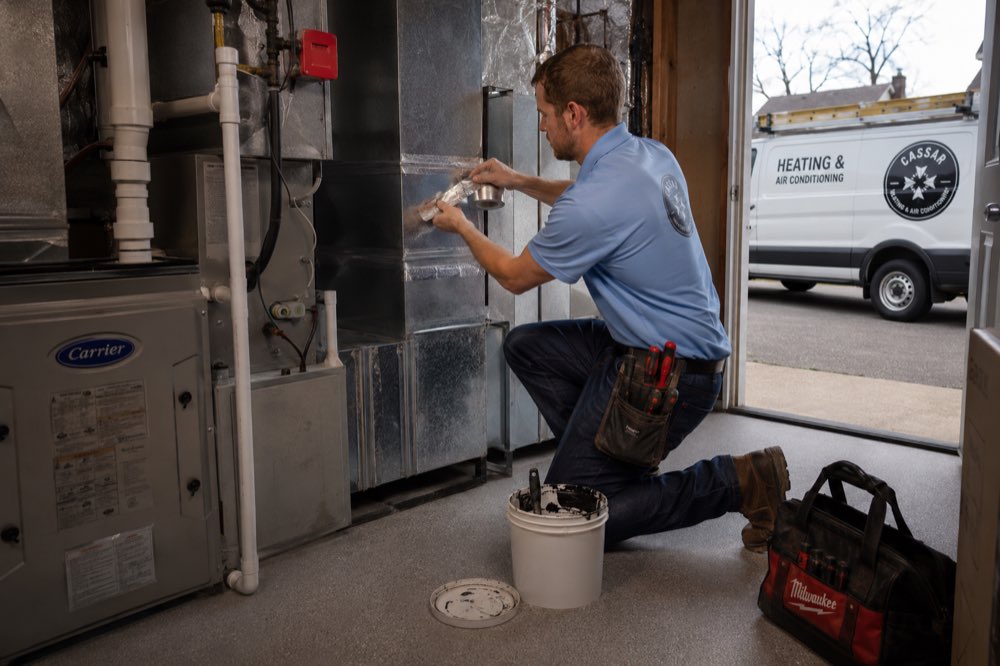
From a single leaking joint to a full duct replacement in a three-storey Windfields home, David handles it directly.
David designs and installs complete duct systems sized to your home’s actual load, not a generic template. Oshawa’s newer builds in Kedron and north Oshawa often have layouts that need careful trunk-and-branch planning to reach every room evenly. Every installation starts with a Manual D calculation so the system actually performs.
Leaking joints, disconnected flex duct, and collapsed sections are the most common calls David gets in Oshawa. He carries materials on the truck so most repairs finish the same day. A repair that takes an hour can recover 20–30% of the conditioned air you’re currently losing into an unfinished basement.
Oshawa’s older homes in Lakeview, O’Neill, and the Central neighbourhoods frequently have original galvanized ductwork from the 1950s and 60s that’s corroded, undersized, or configured for gravity furnaces long since replaced. When repair stops making financial sense, David replaces the system and makes sure the new layout matches the furnace or heat pump it’s serving.
Duct systems develop small leaks at joints over time, especially as seasonal temperature swings cause metal to expand and contract through Ontario winters and summers. David inspects accessible ductwork, seals problem joints with mastic or foil tape, and checks static pressure so your furnace or air conditioner isn’t working harder than it needs to.
Upgrading to a 96% AFUE furnace or a two-stage heat pump in an older Oshawa home without upgrading the ductwork first is a mistake that shows up as noise, short-cycling, and uneven temperatures. David checks whether your existing duct size and layout can handle the new equipment’s airflow requirements before any upgrade goes in.
A completely disconnected duct trunk in January means your furnace is heating the basement while the rest of the house drops fast. David takes emergency calls across Oshawa and picks up the phone himself. He’ll tell you honestly whether it can wait or whether it needs attention today.
Since 2011, I’ve worked in hundreds of Oshawa homes, crawlspaces under wartime-era houses near the old GM plant, half-finished basements in 1980s Eastdale builds, and brand-new construction in Windfields where the duct rough-in looked fine on paper but wasn’t delivering air to the second floor. I carry the tools and materials to diagnose and fix most issues on the first visit, and I’ll tell you straight whether a repair makes sense or whether replacement is the smarter call long-term.
Sheet metal ductwork, the galvanized steel trunk-and-branch systems installed through the 1950s, 60s, and 70s, can physically last 50 years or more, but that doesn’t mean it’s still doing its job properly. Joints come apart, internal lining deteriorates, and the system that was designed for a 60% AFUE gravity furnace can’t handle the static pressure of a modern high-efficiency unit without audible noise and airflow problems.
Flexible duct, the corrugated insulated tubing used in most homes built since the 1980s, has a realistic service life of 20 to 25 years. The inner liner degrades, the insulation loses its R-value, and the corrugated shape creates more air resistance than sheet metal to begin with. Ontario’s climate makes it worse: the repeated cycle from -20°C winters to +35°C summers puts repeated thermal stress on joints and connections.
Keeping ductwork sealed is the single most effective maintenance step for extending its life. Mastic sealant applied to accessible joints every 10 to 15 years outperforms tape, which dries out and peels. David checks sealant condition on every maintenance visit and reapplies where it’s failed.
A targeted duct repair, sealing leaks, reconnecting a separated joint, or replacing a collapsed flex duct run, typically costs $200 to $600 in Oshawa, depending on access and how much material is involved. If the problem is accessible from an open basement, it’s faster and cheaper. If it’s behind drywall or in a finished ceiling, access adds time and cost.
A full duct replacement in an average three-bedroom Oshawa home runs $3,500 to $7,000 or more, depending on the size of the home, how many supply and return runs are needed, and whether the basement is open or finished. Homes with attic-mounted systems or ductwork running through conditioned space rather than an unconditioned basement sit at the higher end. Adding zone dampers or a fresh-air intake pushes costs further.
New ductwork installation in an addition or a home that previously had no duct system starts around $4,000 and goes up based on square footage and layout complexity. Every job David quotes is priced before work starts. The best way to know what your specific job will cost is to get a free quote from David, no pressure, no obligation.
Oshawa’s housing stock breaks into fairly distinct eras, and each one comes with its own ductwork reality. The wartime and post-war homes concentrated around Lakeview, O’Neill, and the streets near the old GM Autoplex often have original octopus-style gravity duct systems, oversized round trunks that fed warm air upward by convection before forced-air furnaces became the standard. Those systems were never designed for the higher static pressures of modern blowers, and trying to run a 96% AFUE furnace through them without modification creates noise, pressure imbalance, and premature heat exchanger wear.
Homes built in Eastdale, Centennial, and the McLaughlin neighbourhood through the 1970s and 80s typically have sheet metal trunks with flex duct branches added during renovations over the years. The original metalwork is often serviceable, but the add-on flex runs are frequently undersized, kinked, or connected with insufficient support, creating pressure drops that leave end rooms underperforming.
The newer subdivisions north of Taunton Road in Kedron, Windfields, and Pinecrest were built quickly through the 2010s and early 2020s. Builder-grade installations in these homes are hit-or-miss. David regularly finds duct runs that were rough-in approved but poorly supported, causing sag and restriction over time. Second and third floors in these taller builds sometimes have undersized return paths, which creates negative pressure and audible rushing at grilles.
Uneven temperatures between rooms are the most common complaint David hears from Oshawa homeowners. When one bedroom is always 3 to 4 degrees colder than the thermostat setting and another is too warm, it usually points to a specific duct branch that’s undersized, disconnected, or blocked. The furnace or air conditioner is often working fine, the delivery system is the problem.
A sudden spike in heating or cooling costs without a change in usage patterns is worth paying attention to. If a duct joint separates in an unfinished basement or inside a wall cavity, conditioned air goes directly into unconditioned space. The equipment runs longer to compensate, and your energy bill reflects it. In Durham Region winters, a separated trunk line can double heating runtime within days.
Whistling, rushing, or banging from the vents also flags a duct problem. Whistling usually means a restriction, a kinked flex duct, a closed balancing damper, or undersized return. Banging on startup often means metal duct panels flexing from too much static pressure, which happens when too many vents are closed or the filter’s too restrictive for the system design. David sees both regularly in Oshawa’s 1990s and 2000s-era homes.
Durham Region’s heating season runs hard from November through March, with January and February regularly hitting -15°C to -20°C. Ductwork that runs through an unheated garage, a crawlspace, or an uninsulated rim joist area loses heat rapidly during those coldest stretches. Wrapping or replacing insulation on those runs makes a measurable difference in what the rooms at the end of that branch actually receive.
Summers in Oshawa bring high humidity alongside the heat. Return ductwork with unsealed gaps can pull humid, unconditioned air from basements or crawlspaces into the air handler, making the air conditioner work harder to dehumidify and cool at the same time. Sealing return ducts is just as important as sealing supply runs, and it’s frequently overlooked.
Balancing the system seasonally is worth doing in two-storey homes. Heat rises, so many Durham Region homeowners run well in summer with dampers adjusted for upstairs cooling and struggle to get warmth to upper floors in winter without re-adjusting. David can install manual or motorized balancing dampers that make this adjustment simple and permanent.
TSSA regulations govern natural gas appliances in Ontario, and ductwork that’s improperly sealed around a gas furnace creates a real risk: combustion gases, including carbon monoxide, can be drawn into the return air stream if the duct system depressurizes the area around the furnace cabinet. This is called backdrafting, and it’s one of the reasons David checks return duct integrity on every furnace service call, not just on dedicated duct jobs.
The Canada Greener Homes Grant program has provided rebates for air sealing work, which includes duct sealing in some configurations. Ontario’s Enbridge Home Efficiency Rebate program has also offered incentives tied to HVAC efficiency upgrades. Eligibility and availability change, so David recommends checking current program status directly, but duct improvements that reduce your heating load can support rebate applications tied to furnace or heat pump upgrades.
From a pure efficiency standpoint, the U.S. Department of Energy estimates that the average duct system loses 20 to 30% of conditioned air through leaks. In Canadian climate conditions, where heating demand is higher and longer, that loss is even more costly per year. Sealing and, where warranted, replacing ductwork is one of the highest-return upgrades an Oshawa homeowner can make before or alongside a new furnace or heat pump installation.
Checking the simple things before calling saves time for everyone, here’s where to start.
Make sure every supply vent in the home is fully open. Closed vents cause pressure imbalances that reduce performance and can damage equipment.
In basements and utility rooms, look for disconnected joints, torn flex duct, or visible gaps. Even small separations can lose significant conditioned air.
A blocked filter causes pressure imbalance across the entire duct system, making uneven heating and cooling worse. Replace it first before anything else.
Rooms consistently too hot or cold, or that take longer to reach temperature, indicate specific duct branches that are undersized, leaking, or poorly routed.
Unusual dust buildup around supply vents can indicate leaks pulling in unconditioned air from attic or wall cavities, a significant air quality and efficiency issue.
If none of the above fixed it, a licensed technician needs to take a look. David serves all of Oshawa and Durham Region and picks up the phone himself.
The clearest signs are rooms that never reach the thermostat setting, a noticeable drop in airflow at vents far from the furnace, or heating and cooling bills that climbed without a change in usage. In Oshawa homes, particularly the post-war bungalows in Lakeview and the 1980s builds in Eastdale, leaking duct joints are extremely common because those systems are 30 to 60 years old and were never sealed with mastic. Undersizing is a different issue, it shows up as persistent airflow imbalance even in a system with no visible leaks. The only accurate way to confirm undersizing is to measure static pressure at the furnace and calculate whether the duct cross-sections match the equipment’s design airflow. David can do that diagnostic on the same visit as any ductwork inspection. A visual check of accessible basement ductwork is a good starting point: look for joints wrapped in deteriorating grey duct tape, which dries out and peels within a decade, or flex duct runs that sag and kink between hangers.
Duct repairs in Durham Region generally run $200 to $600 for targeted work, sealing leaks, reconnecting a separated joint, or replacing a short flex duct section. What drives that range is access: an open basement takes 30 minutes, a run behind finished drywall takes considerably longer. Full duct system replacement in a typical three-bedroom home in Oshawa or the surrounding Durham Region communities runs $3,500 to $7,000, and the main variables are house size, number of supply and return runs, whether the basement is finished, and whether any zoning or fresh-air components are included. Homes with ductwork in attics or conditioned chases sit at the higher end because access and insulation requirements increase the labour significantly. New duct installation for an addition or a home converting from baseboard heat starts around $4,000 for a modest square footage and increases from there. The best way to know what your specific job will cost is to get a free quote from David, no pressure, no obligation.
Yes, significantly. The furnace and air conditioner are designed to move a specific volume of air at a specific static pressure. When ductwork leaks, the system loses that conditioned air before it reaches the living space, so the equipment runs longer cycles to hit the thermostat set point. Over time, that extra runtime increases wear on the heat exchanger, compressor, and blower motor. With a high-efficiency two-stage furnace, excessive static pressure from undersized or restricted ducts can cause short-cycling, the furnace shuts down on a limit switch before completing a full heating cycle, which is both inefficient and hard on components. Air conditioners respond similarly: restricted return airflow causes the evaporator coil to freeze up, which drops efficiency dramatically and can damage the compressor if it runs long in that state. David’s seen more than a few Oshawa homeowners get quoted a furnace or AC replacement when the actual problem was a duct system that was strangling the equipment. A duct assessment before replacing equipment is always worth the time.
A complete duct system installation in a typical Oshawa three-bedroom home takes one to two full days for David and his crew, assuming the basement is open and accessible. Finished basements add time for careful routing and may require some drywall access for branch runs to upper floors. New construction rough-ins where everything is open move faster, often finishing in a single day for a mid-sized home. Targeted repairs or partial replacements, replacing a deteriorated flex duct section or rerouting a branch run, typically take two to four hours. If David’s replacing ductwork as part of a furnace installation, the duct work runs concurrently so the total project time doesn’t double. He’ll give you a time estimate with the quote so you know what to plan for before the job starts.
Sealing makes sense when the duct system’s layout and sizing are fundamentally sound, the branches reach all the right rooms, the trunks are appropriately sized for the equipment, and the problems are joint leaks or failing tape rather than structural issues. Mastic-sealed sheet metal ductwork that’s been well-maintained can run reliably for another 20 to 30 years. Replacement makes more sense when the system was designed for equipment that’s been replaced with something significantly different, for example, replacing an older 80% furnace with a two-stage 96% AFUE unit that moves more air at lower speeds, or when flex duct is so deteriorated that the inner liner is collapsing, or when the original layout left rooms without adequate supply runs that were patched with too-small branches over the decades. David’s answer after inspecting your system will be specific to what he finds, not a default toward the more expensive option.
In most cases in Oshawa, yes. Hot and cold spots, rooms that lag behind the thermostat or never quite get there, are the most reliable symptom of a duct problem rather than an equipment problem. The specific cause depends on which rooms are affected and where they sit relative to the furnace. A room at the far end of a long flex duct run loses more air to friction and leaks than one directly above the furnace. A second-floor bedroom over a garage often gets inadequate heat in winter because the duct branch serving it is undersized and the room itself loses heat quickly through the garage ceiling. David asks homeowners which specific rooms are the problem before he even looks at the system, because that pattern tells him where to look first. In older Oshawa homes, it’s frequently a combination of an undersized supply branch and a missing or undersized return, the supply can’t push air in because there’s nowhere for existing air to go.
David focuses on duct installation, repair, and replacement rather than duct cleaning. Duct cleaning, the physical removal of dust and debris from inside the ductwork using rotary brushes and negative pressure vacuuming, is a specialized service that requires different equipment. What David does assess on every duct inspection is whether dust or debris accumulation is a symptom of something structural, like a leaking return pulling in basement or attic debris, or a damaged liner shedding material into the airstream. If that’s the case, the cleaning won’t solve the underlying problem and he’ll tell you so. For duct cleaning referrals in the Oshawa area, David can point you toward a reputable provider. The duct repair or sealing work that stops contaminants entering the system in the first place is what David handles directly.
The most common pattern David sees in older Oshawa homes, particularly those in O’Neill, Lakeview, and Central Oshawa built between the 1940s and 1970s, is a duct system designed around a gravity warm-air furnace that was later replaced with a forced-air unit without redesigning the layout. Those original systems used oversized round trunks because they relied on natural convection, not a blower. When a modern furnace goes in, the system can’t build adequate static pressure to push air to end rooms, and the oversized cross-section causes the air to lose velocity and dump heat too early. You also see additions and renovations from the 80s and 90s that added rooms serviced by flex duct branches tapped off wherever there was a convenient hole in the existing trunk, with no regard for whether the trunk still had capacity at that point. The result is typically three or four rooms at the end of the system that barely get airflow while the rooms near the furnace overheat. A proper duct assessment maps airflow at each register and works back to identify where the layout is failing.
“The flex duct in our Oshawa basement had completely separated from the main trunk, two rooms weren’t getting heat. Cassar fixed it same day and it cost exactly what they quoted.”
“David came out to our place in north Oshawa after I called about uneven heating on the second floor. He checked the static pressure right there with his gauge, explained exactly which branch run was undersized, and gave me the repair quote on the spot. He didn’t try to sell me a new furnace, just fixed the actual problem. Refreshing.”
“I got three quotes for duct replacement in my Oshawa home. Two were vague about what they’d actually do. David’s quote itemized every run, every register, and the return path, and his price came in below the others. He laid down floor protection before he started and the basement looked cleaner when he left than when he arrived.”
David covers all of Durham Region, find ductwork service in your community below.
Same-day service available. TSSA certified. Honest pricing. Call or book online.