
When you call about a tankless water heater, you get David on the phone, he’ll diagnose the problem, give you a straight quote, and get your hot water running again the same day in most cases. He’s been doing this work across Oshawa, Whitby, Ajax, Pickering, Clarington and every community in between since 2011.
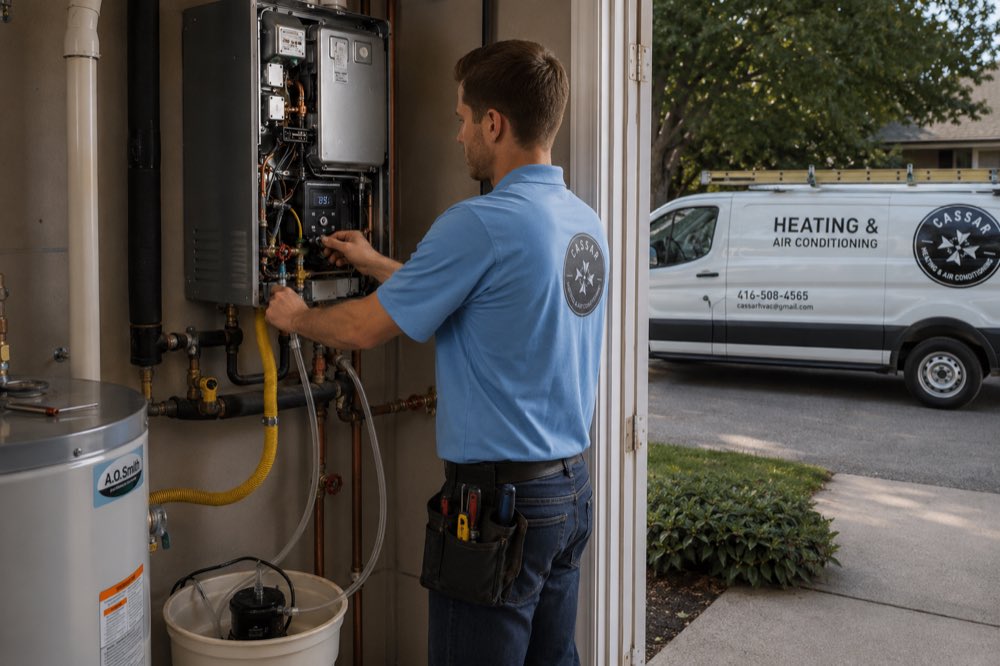
From a new install to an error code you can’t clear, David handles the full range of tankless water heater work across Durham Region.
David sizes your new unit based on your home’s peak flow demand, not just square footage, so you’re not left with a unit that can’t keep pace when two showers run at once. He handles the full scope: gas line connection, venting, condensate drain, and commissioning. Every installation meets TSSA requirements and manufacturer specs.
Error codes, ignition failures, fluctuating water temperature, and scale buildup in the heat exchanger are the most common tankless problems David sees in Durham Region homes. He carries parts for Navien, Rinnai, Noritz, and other major brands on the truck, which means most repairs happen the same visit. You’re not waiting three days for a part to arrive.
If your tankless unit is past its useful life or the repair cost doesn’t make sense, David’ll give you an honest read on that before recommending anything. He’ll explain what the new unit costs, what rebates apply, and whether your existing gas line and venting can carry over or need upgrading. The quote covers everything, no line items appearing on installation day.
Durham Region’s water has enough dissolved minerals that scale builds up inside a tankless heat exchanger faster than most homeowners expect. David’s annual tune-up includes a full descaling flush, filter cleaning, burner inspection, and a flow-rate check so the unit’s running at the efficiency you bought it for. Most manufacturers require annual service to keep the warranty valid.
No hot water in the middle of January is an emergency, and David treats it that way. He covers all of Durham Region for same-day and emergency service calls, and you’ll reach him directly when you call, not a dispatcher who relays the message. If there’s a gas-related fault code or a complete shutdown, getting it resolved the same day matters.
If you’re moving from a tank unit or an older non-condensing tankless model, upgrading to a condensing unit, which recovers heat from exhaust gases, can push efficiency to 96–98% AFUE. David’ll walk you through the real-world efficiency difference, the rebate programs currently available through Enbridge and the Canada Greener Homes initiative, and what the upgrade genuinely pays back over five and ten years.
Four steps from your call to hot water restored.
David answers the phone directly, you describe what’s happening with your tankless unit and he’ll tell you right away whether it sounds like a repair, a service call, or something that needs a same-day visit. If you’d rather book online, you can do that through the contact page and he’ll follow up within the hour.
David reads the error codes, inspects the heat exchanger, checks the gas supply, and tests the flow sensor before telling you what’s wrong. You get a specific quote covering parts and labour before a single wrench turns, no surprises when the invoice arrives.
David completes the repair or installation himself, your home’s not a training ground for apprentices. He tests the unit through a full heating cycle, confirms the flow rate at the tap, and makes sure there are no fault codes before packing up.
Before he leaves, David walks you through what was done, what to watch for, and when to book the next annual service to keep your warranty valid. You’ve got his direct number if anything comes up after.
David Cassar has been installing, repairing, and replacing tankless water heaters in Durham Region since 2011. He works independently, so you’re getting his honest assessment, he’s got no sales quota to hit and no manufacturer deal pushing him toward one brand over another.
In 2011, David Cassar started Cassar Heating & Air Conditioning because he wanted to do HVAC work the way it should be done, one homeowner at a time, with an honest diagnosis and a price that doesn’t move. He’d watched too many customers get pushed into replacements they didn’t need and charged extra for work that was never discussed. He knew there was a better way to run things.
On tankless water heater work specifically, David takes the time to do the load calculation right. He checks your household’s peak flow demand, confirms the gas line can handle the unit’s BTU requirement, and sizes the venting before recommending anything. He’s seen what happens when someone installs a unit that’s too small for the house, the complaints start the first time two people try to shower at once.
When he’s done, your utility room looks the way it did when he arrived. He uses drop cloths, takes his packaging out, and leaves the space clean. Homeowners across Durham Region have been calling him back since 2011 because the work’s done right the first time and there’s no bill for work that wasn’t discussed.
“Our Navien was throwing an error code and cutting out mid-shower. David had the part on the truck and it was running again before noon.”
“I called David because we were replacing an old tank unit and I wanted to go tankless. He came out, measured the gas line, told me it’d need upgrading to 3/4 inch, and gave me one price that covered everything. No add-ons on the day. He also told me I qualified for a rebate I didn’t know about.”
“Quoted me fair, showed up the next morning, and the utility room was cleaner when he left than when he got there. The tankless install looks tidy too, proper venting, good clearances. You can see the difference between someone who cares about the work and someone who just wants to get out the door.”
Before you book anything, these are the questions worth asking. Here’s how David answers them.
A tankless unit heats water on demand rather than storing it in an insulated tank. When you open a hot water tap, cold water flows through the unit and passes over a heat exchanger fired by a gas burner. The burner ignites, heats the water to your set temperature, and the hot water travels straight to the tap. The moment you close the tap, the burner shuts off. There’s no standby heat loss because there’s no tank sitting there staying hot around the clock. The trade-off is that the unit needs to fire instantly and reach temperature within seconds, which is why gas line pressure, venting, and unit sizing all matter more than they do with a tank heater.
A full tankless water heater installation in Ontario typically runs between $1,800 and $3,500, all in. The spread comes down to a few things: the unit itself ranges from roughly $900 for a mid-range non-condensing model to $1,800 or more for a premium condensing unit like a Navien NPE-A2 or Rinnai RUR series. Then there’s the labour, the gas line work if your current 1/2-inch supply needs upgrading to 3/4-inch, and any new venting runs. Condensing units vent through PVC pipe, which is cheaper to run than stainless steel flue pipe, that can offset some of the unit’s higher upfront cost. Available rebates through Enbridge’s Home Efficiency Rebate Plus program can reduce your net cost by $500 or more depending on efficiency tier. The best way to know what your specific job will cost is to get a free quote from David, no pressure, no obligation.
Yes, if it’s sized correctly. This is where most DIY or rushed installs go wrong. A tankless unit’s capacity is measured in litres per minute (LPM) at a temperature rise, and what you need depends on how many fixtures you’re likely to run simultaneously and your incoming cold water temperature. In Durham Region, groundwater temperatures in winter can drop to 4–6°C, which means the unit has to work harder to reach 49°C than it would in a warmer climate. A two-bathroom home running two showers at once typically needs a unit rated at 9–11 LPM. A larger home with three bathrooms and a soaker tub needs to step up to 12–14 LPM. David calculates your peak demand before recommending a model so you’re not buying a unit that leaves someone running cold.
Most residential tankless water heaters require a 3/4-inch gas supply line and a dedicated shutoff valve within a metre of the unit. Standard tank heaters typically run off 1/2-inch supply lines, so if you’re switching from a tank, there’s a good chance the gas line needs upgrading. Beyond line diameter, the unit needs adequate gas pressure, typically 3.5 inches water column for natural gas, and the line needs to be sized for the unit’s maximum BTU draw, which can run 150,000–199,000 BTU/hr for a high-capacity model. David checks all of this during the initial assessment and includes any gas line work in the quote, so you know the full cost upfront.
The honest answer is 15–25% on the water heating portion of your gas bill, which works out to roughly $100–$250 per year for an average Ontario household. The savings come almost entirely from eliminating standby heat loss, a conventional tank fires its burner several times a day just to keep stored water hot, even when nobody’s using it. A condensing tankless unit adds another layer of savings by recovering heat from exhaust gases. Your actual savings depend on how much hot water your household uses, your current unit’s efficiency rating, and gas prices. The savings calculation is real, but the honest case for going tankless also includes the 20-year lifespan versus 10–12 years for a tank, and the freed-up utility room space.
A well-maintained tankless water heater typically lasts 18–22 years. A conventional tank heater lasts 10–13 years. The difference matters when you’re calculating the real cost of ownership, you’ll likely replace a tank unit twice in the time a tankless unit runs. The condition that most shortens tankless lifespan in Durham Region is scale buildup inside the heat exchanger from hard water. Annual descaling flushes keep the heat exchanger clean and the efficiency where it should be. Most manufacturers require documented annual maintenance to keep the warranty valid, so skipping that service call costs you at both ends.
Yes. The Enbridge Home Efficiency Rebate Plus program currently offers rebates for qualifying high-efficiency tankless water heaters, the amount depends on the unit’s energy factor rating and whether you’re bundling it with other eligible upgrades like insulation or a smart thermostat. The Canada Greener Homes Grant has offered up to $1,000 for qualifying hot water equipment upgrades, though program availability and funding levels change, so it’s worth confirming current terms. David stays current on what programs are active so he can tell you what applies to your specific situation. Some rebates require a pre-installation assessment, so timing matters. The best way to know what your specific job will cost, net of rebates, is to get a free quote from David, no pressure, no obligation.
Still not sure? Call David at (416) 508-4585
Ontario’s seasons put different demands on your water heater. Here’s what to watch for each quarter.
Book your annual descaling flush and tune-up in September or October, before the heating season pushes your hot water demand up. Cold groundwater temperatures in Durham Region’s winter months mean your tankless unit works harder to reach set temperature, you want the heat exchanger clean going into that load. David checks ignition, flow sensors, and the venting seal at this visit too, so there are no surprises in January.
If your tankless unit is installed in an unheated garage or against an exterior wall, watch for error codes related to freeze protection, most modern units have a built-in electric element that prevents freezing, but it needs live power to work. Also watch for temperature fluctuations mid-shower, which often signal scale buildup in the heat exchanger restricting flow. An ignition failure on a cold morning that clears after a few tries usually means the gas valve or igniter needs attention before it fails completely.
Spring is the best window to replace an aging tankless unit or upgrade from a tank. Contractors aren’t running emergency furnace calls, scheduling is flexible, and rebate program funding for the calendar year is still available. If your unit’s over 15 years old or you’ve had two or more repair calls in the past year, spring is the right time to have that conversation, David’ll give you a straight read on whether repair or replacement makes more financial sense.
Hot water demand drops in summer, which makes it a good time to descale the unit if you skipped the fall service. It’s also the right time to install an inline water softener or scale inhibitor if you’ve been fighting hard water buildup, doing it before the high-demand season means the heat exchanger goes into fall in good shape. If you’ve been thinking about adding a recirculation pump to eliminate the wait for hot water at far fixtures, summer is the easiest time to add it without disrupting the household.
David covers all of Durham Region. Find your community below for local service details.
Same-day service available across all of Durham Region. TSSA certified. Honest pricing. No surprises.