
When you call about a gas line, David picks up, arrives with the parts to do the job right, and won’t leave until the connection is tested, documented, and safe. He’s been running and repairing gas lines across Durham Region since 2011, from Pickering to Port Perry.
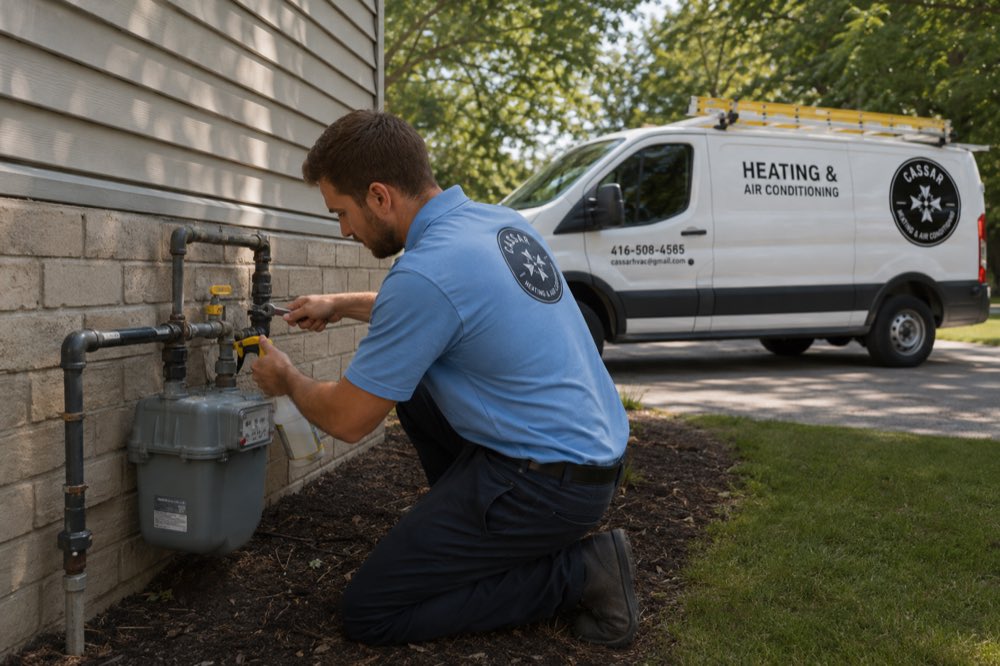
Every job below is work David does himself, under TSSA Licence #000398183, with permits pulled and inspections handled from start to finish.
David runs new gas lines for furnaces, stoves, fireplaces, dryers, BBQ hookups, and standby generators throughout Durham Region. He calculates the correct pipe diameter for your appliance load before any pipe gets cut, so you’re not left with a line that starves your furnace on the coldest night of the year. Every new installation includes permit coordination and a pressure test before the gas goes live.
A corroded fitting, a pinhole leak, or a joint that’s worked loose over years of vibration, David traces the problem with a gas detector before touching anything, so he’s not guessing. Most repairs on accessible residential lines get finished in a single visit. He’ll tell you honestly if the repair is worth doing or if the section of pipe should be replaced instead.
Older black iron pipe that’s corroding, or a layout that no longer matches your appliances, David replaces the section that needs it and leaves the rest intact when that’s the right call. He won’t recommend a full re-pipe if a targeted replacement solves the problem. New runs use properly rated flex connector or rigid black iron pipe depending on the application, per current Ontario codes.
Gas lines don’t need annual servicing the way a furnace does, but David checks fittings, shutoff valves, and connection points whenever he’s servicing the appliances connected to them. If he spots a fitting that’s starting to corrode or a shutoff valve that’s seized, he tells you and explains the options before doing anything. Catching a slow leak early costs far less than an emergency call in January.
If you smell gas, hear a hissing sound near a pipe, or your gas appliances suddenly won’t light, David answers the phone directly. He carries gas detection equipment and common fittings on every service call, so he’s not making a second trip for parts. Emergency response covers all of Durham Region, including Clarington, Port Perry, and Uxbridge.
Upgrading to a high-efficiency furnace or a tankless water heater often means the existing gas supply line is undersized for the new appliance’s BTU demand. David checks the line size against the new unit’s spec sheet before the install, and upgrades the run if it’s needed. Getting this right upfront prevents nuisance lockouts and warranty headaches down the road.
No surprises, no dispatch queue, no crew of strangers. Here’s what happens from your first call to a tested, permitted gas line.
David picks up the phone personally. You describe what’s happening, a new appliance you’re adding, a smell, a line that’s too small, and he asks the questions he needs to show up ready, not guessing.
On arrival, David inspects the existing line, checks pipe sizing against your appliances, and tests for any leaks before giving you a written quote. The number you see is the number you pay, he won’t add costs after the work’s done.
David runs, repairs, or replaces the gas line, pulls the required Ontario permit, and pressure-tests the finished connection before reconnecting any appliances. He doesn’t leave until the line holds pressure and every appliance on it is confirmed working.
You get a copy of the completed permit and a clear explanation of what was done and why. If anything needs a follow-up inspection from the authority having jurisdiction, David coordinates that directly so you don’t have to chase paperwork.
David has been running gas lines in Durham Region since 2011, and he’s the one who shows up, does the work, and signs off on it. There’s no crew you’ve never met, no subcontractors, no guessing what the final bill will be.
Before starting Cassar Heating & Air Conditioning in 2011, David Cassar spent years working for larger HVAC outfits and kept running into the same problem: homeowners were getting sold work they didn’t need by technicians who barely understood their specific situation. He started his own business because he wanted to do the job right, give honest advice, and still be the person who answers the phone when you call back.
On gas line work specifically, David is meticulous about pipe sizing. Getting the BTU capacity right for the combined load of every appliance on a branch is something a lot of contractors skip, they just match the existing pipe diameter and move on. David runs the numbers, and if the existing line is marginal, he tells you before the new appliance goes in, not after you’re troubleshooting nuisance shutdowns in February.
He treats every home the way he’d want his own treated. Floors get protected, the work area gets cleaned up, and nothing gets left open or untested when he walks out. That’s why a significant portion of his work in Durham Region comes from homeowners who’ve used him before or from neighbours they’ve told about him.
“Had a gas smell near the laundry room. David found a loose fitting behind the dryer connection in under 20 minutes and fixed it on the spot. No drama, no upsell.”
“I wanted to add a gas line for an outdoor BBQ and wasn’t sure what was involved. David walked me through the whole thing, explained that my existing branch had enough capacity, pulled the permit, ran the line, and pressure-tested it before he left. Straight shooter, knew his stuff.”
“The quote was exactly what I paid. He covered the floor before doing anything, cleaned up after himself, and the price wasn’t padded with mystery charges. That’s all I wanted and it’s exactly what I got.”
Seven questions David hears most often, answered the way he’d answer them face to face.
You need a new gas line whenever you’re adding an appliance that doesn’t already have a dedicated gas supply nearby. The most common situations David runs into in Durham Region are: adding an outdoor BBQ hookup, converting from an electric stove to a gas range, adding a gas fireplace insert, installing a standby generator, or replacing a gas dryer and finding the existing connection is the wrong type. In older homes in Oshawa or Whitby, it’s also common to find that the existing lines were sized for old atmospheric furnaces and can’t handle a new high-efficiency unit without being upgraded. A quick call to David will tell you which category your job falls into.
Gas line installation in Ontario typically runs between $300 and $1,500 for a residential job. A short extension from an existing branch, say, adding a BBQ hookup near the back of the house, sits at the lower end, usually $300 to $600. Running a new dedicated line from the meter through a finished basement, into a new appliance location, with permit and pressure test included, is more likely $800 to $1,500. What drives the variation: the length of the run, whether drywall or finished ceilings need to be accessed, the pipe size required for the load, and whether you’re adding a shutoff valve in a tight or easy location. Permits are typically an additional $100 to $200 through the municipality. The best way to know what your specific job will cost is to get a free quote from David, no pressure, no obligation.
Yes, in most cases an existing branch line can be extended to serve a new appliance, but the key step that gets skipped too often is checking whether the existing pipe has enough capacity for the added BTU load. Every section of gas pipe in your home is sized to carry a specific maximum flow at a minimum acceptable pressure. When you add another appliance to a branch, you increase the total BTU demand on that section of pipe. If it was already running close to capacity, the new appliance will cause a pressure drop that starves all of them slightly. David calculates the combined load before recommending whether the existing pipe can be extended or whether a larger supply line is needed from the next upstream junction. It’s a straightforward calculation and it’s what separates a proper installation from one that causes headaches later.
Pipe sizing depends on two things: the total BTU demand of everything on that branch, and the length of the run from the meter or regulator to the farthest appliance. A standard gas range draws about 55,000 BTU/hr. A mid-efficiency furnace might draw 80,000 to 100,000 BTU/hr. A tankless water heater can draw 199,000 BTU/hr on its own. Add those up, factor in the pipe length, and the sizing tables in the Ontario Gas Utilization Code tell you what diameter you need. For most single-appliance residential runs under 30 feet, 1/2-inch or 3/4-inch black iron or corrugated stainless steel is sufficient. Longer runs or high-BTU appliances like tankless heaters or generators may need 1-inch or larger supply lines. David runs these numbers for every job before recommending pipe size.
A straightforward extension or new hookup in an accessible area, unfinished basement, open utility room, short run to the exterior for a BBQ, typically takes two to four hours including pressure testing and reconnecting appliances. A longer run through a finished basement or through walls to a new kitchen appliance location might take four to six hours. Jobs that require cutting into finished drywall, working around other mechanical systems, or accessing difficult pipe runs in older homes in areas like Ajax or Clarington can take a full day. David gives you a realistic time estimate when he quotes the job, so you’re not left waiting around with the gas off all day.
In Ontario, any installation, alteration, or repair of a gas line requires a permit under the Technical Standards and Safety Act and must be performed by a TSSA-licensed contractor. The contractor pulls the permit, not the homeowner, and the work is subject to inspection by the local authority having jurisdiction. David handles permit applications as a standard part of every gas line job in Durham Region. The permit covers the installation and the required pressure test. If you’re getting a quote from a contractor who doesn’t mention permits, that’s a significant red flag: unpermitted gas line work is illegal in Ontario and can affect your home insurance and your ability to sell the property.
The most common sign of an undersized gas line is appliances that don’t perform consistently at full input. A furnace that short-cycles on cold days, a gas range where the burner flame drops when the dryer kicks on, or a tankless water heater that throws fault codes under high demand, all of these can trace back to a gas supply line that’s running at or near capacity. Aging lines show different symptoms: visible corrosion on fittings, a faint sulphur smell near connections that gets worse in humid weather, or shutoff valves that are stiff or stuck. Homes built before 1980 in areas like Oshawa’s older neighbourhoods often still have original black iron runs that are worth having checked. David can assess your existing system on the same visit as any other service call and give you a clear read on whether the line is adequate or needs attention.
Gas lines don’t take a season off, but the risks and the best maintenance windows shift with the calendar. Here’s what to watch for each season in Durham Region.
September and October are the best time to have David check your gas line connections before the furnace starts running hard. A fitting that’s slightly loose or a flexible connector that’s starting to crack won’t be obvious in summer, but 24-hour furnace operation in a Durham Region January puts real stress on every joint. If you’re adding a gas fireplace or generator before winter, fall is when the permit wait times are shortest and David’s schedule has the most availability.
If your furnace or water heater starts intermittently cutting out during cold snaps, don’t assume it’s the appliance, a gas pressure drop from an undersized or partially blocked line can cause exactly the same symptoms. In homes with outdoor gas meter regulators, extreme cold can affect regulator performance. If you smell gas near any connection point, treat it as an emergency and call David directly rather than waiting for a scheduled appointment.
Spring is when David is busiest with A/C startups, which means gas line work, especially non-urgent installations, gets scheduled faster if you book in April or May before the summer heat pump season starts. It’s also the right time to run that BBQ line before outdoor entertaining season starts. If you’ve been thinking about converting from an electric stove to gas, spring gives the most comfortable working conditions in the kitchen.
Your furnace’s gas connections sit idle through the summer, which is exactly when a corroding fitting goes unnoticed. If David’s doing A/C work at your home between June and August, ask him to check the gas shutoff valve and visible connections on the furnace while he’s there. Summer is also the easiest time to run a new gas line through the house, the furnace is off, the basement is dry, and there’s no urgency that drives up the cost.
David serves every community in Durham Region. Select your area for local pricing information, common gas line situations in your neighbourhood, and how to book.
Gas lines connect to appliances. If you’re replacing an appliance or upgrading your heating system, David handles those jobs too.
Same-day service available across all of Durham Region. TSSA certified. Honest pricing. No surprises.